
What an OnChain Passport Actually Is
An OnChain Passport functions as a decentralized identity layer designed to bridge the gap between Web3 anonymity and real-world regulatory compliance. Unlike traditional Know Your Customer (KYC) databases, which centralize sensitive personal data in vulnerable silos, an OnChain Passport stores cryptographic proofs of identity attributes directly on a blockchain. This architecture allows users to verify their eligibility for regulated financial activities without surrendering their underlying private data to a single custodian.
The system operates by aggregating verification outcomes from multiple trusted issuers into a single, reusable credential. For example, a user might hold a "country stamp" proving residency, a "social proof stamp" confirming digital activity, and a "wallet stamp" verifying asset ownership. These individual attestations are combined to create a comprehensive compliance profile that can be presented to regulated platforms, such as security token issuers or decentralized exchanges, on a per-transaction basis.
This approach fundamentally shifts the liability model of identity verification. By using self-sovereign identity principles, the user retains control over which data points are shared and with whom. This reduces the attack surface for data breaches and aligns with emerging regulatory frameworks that prioritize data minimization and user consent, making it a critical tool for institutional-grade Web3 adoption.
How Stamps Build Your OnChain Reputation
OnChain reputation is constructed through "stamps," which are verifiable credentials issued by trusted attestors. These stamps serve as cryptographic proof of specific attributes, such as unique human identity, geographic residency, or historical wallet activity. Unlike centralized databases, stamps are stored on-chain, allowing for transparent verification while maintaining user sovereignty over data sharing.
Each stamp corresponds to a distinct verification protocol. For instance, a "Gitcoin Grants Donor" stamp verifies that a wallet has contributed to a specific round, while an "ENS Domain" stamp confirms ownership of a unique Ethereum Name Service domain. These individual credentials aggregate to form a composite score, often referred to as a Passport score. This score acts as a gatekeeping mechanism for decentralized applications (dApps), enabling them to enforce compliance rules without requiring sensitive personal data.
The architecture prioritizes user control through selective disclosure. Users can choose which stamps to present to a service provider, ensuring that only the necessary data points are shared for a specific transaction or eligibility check. This granular approach aligns with regulatory frameworks like GDPR, as it minimizes data exposure and supports the principle of data minimization. The underlying mechanism relies on zero-knowledge proofs in advanced implementations, allowing users to prove they meet a threshold score without revealing the individual stamps that comprise it.
For high-stakes financial applications, this system provides a robust layer of identity assurance. By aggregating diverse data sources, OnChain passports mitigate risks associated with sybil attacks and identity fraud. The resulting reputation system is dynamic; as users accumulate more verified stamps, their trust score increases, unlocking access to higher-tier financial products and governance rights. This evolution from anonymous pseudonymity to verified digital identity is foundational to the next generation of compliant DeFi.
Minting Your Passport for Regulatory Proof
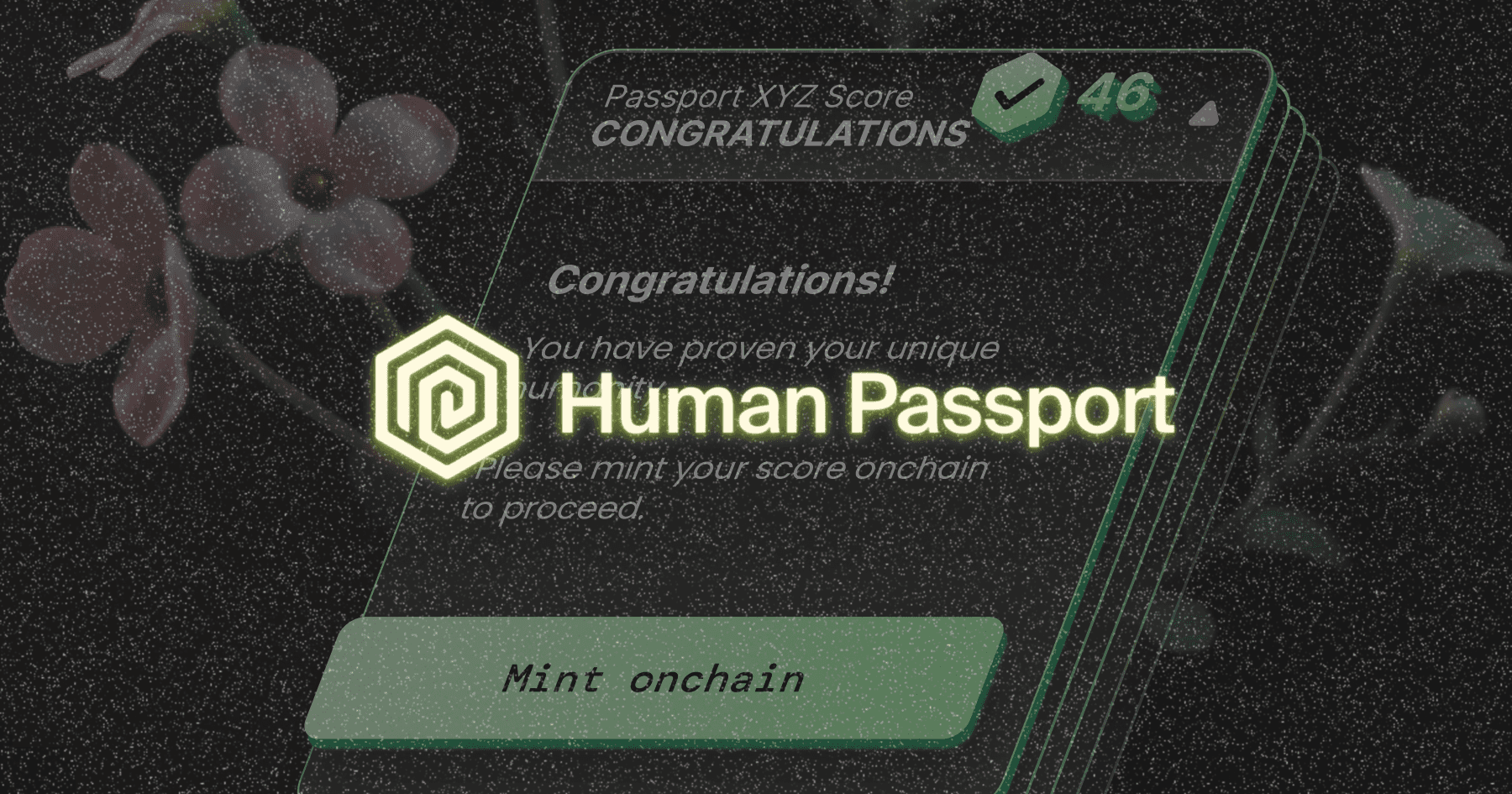
Minting your OnChain Passport transforms a decentralized reputation score into an immutable, on-chain credential. This process creates a tamper-proof record that dApps and regulatory auditors can verify without requiring you to expose raw personal data or sensitive documents. By anchoring your identity to the blockchain, you establish a persistent proof of compliance that travels with your wallet address.
1. Connect Your Wallet and Verify Identity
Before minting, you must establish a baseline of trust by connecting your Web3 wallet to the Passport portal. This step involves completing identity verification through trusted issuers, such as Gitcoin Passport or Tokeny. These issuers validate specific data points—like email ownership, social media presence, or government ID verification—and assign them as "stamps" to your profile. The more diverse and verified stamps you accumulate, the higher your reputation score, which directly influences how dApps and regulators view your compliance standing.
2. Generate the On-Chain Credential
Once your identity is verified, the system generates a cryptographic credential. This is not a simple copy-paste of data; it is a signed statement from the issuer confirming that your wallet address meets specific identity criteria. This credential is structured to be machine-readable, allowing smart contracts to automatically check your eligibility for certain services. The process ensures that the identity data remains under your control, adhering to zero-knowledge principles where possible.

3. Mint the Passport to the Blockchain
The final step is to mint the credential to the blockchain. This action creates a permanent, on-chain record of your identity status. Unlike off-chain databases, this record cannot be altered or deleted by any single party. It serves as a public, verifiable proof that you have undergone the necessary identity checks. This on-chain passport can then be presented to dApps, DeFi protocols, or regulatory bodies as evidence of your compliance status.
4. Verify Compliance with dApps and Regulators
With your passport minted, you can now interact with applications that require verified identity. dApps can query the blockchain to confirm your reputation score and stamp history without needing to store your personal data themselves. For regulators, this provides an auditable trail of identity verification that meets Know Your Customer (KYC) and Anti-Money Laundering (AML) requirements. The result is a seamless, privacy-preserving way to prove who you are in the digital economy.
Comparing OnChain Passport Solutions
Selecting the right decentralized identity provider requires aligning technical architecture with specific regulatory obligations. While the underlying goal—verifying human identity or investor status on-chain—remains consistent, the mechanisms for compliance and data privacy vary significantly across major platforms.
The following comparison evaluates three primary solutions: Human Passport (formerly Gitcoin Passport), Tokeny ONCHAINID, and VerifyInvestor On-ChainPass. The analysis focuses on their target use cases, regulatory alignment, and data handling models.
| Provider | Primary Focus | Privacy Model | Regulatory Alignment | Integration |
|---|---|---|---|---|
| Human Passport | Proof of Personhood | Zero-Knowledge Proofs | General Web3/Airdrop | Low |
| Tokeny ONCHAINID | Investor Verification | Self-Sovereign Data | MiCA/SEC/KYC | Medium |
| VerifyInvestor | Tokenized KYC | Selective Disclosure | Global KYC/AML | High |
Human Passport operates primarily as a reputation and proof-of-personhood tool. It aggregates attestation scores from various activities to distinguish unique humans from bots. Its privacy model relies on zero-knowledge proofs, allowing users to prove they meet a threshold without revealing the underlying data. This solution is ideal for decentralized governance and airdrop distribution where Sybil resistance is the primary concern, rather than strict financial regulatory compliance.
Tokeny ONCHAINID is built specifically for the institutional and regulated tokenization space. It functions as a self-managed, reusable investment passport. The platform aligns directly with frameworks like the EU’s MiCA and US SEC regulations, enabling issuers to verify accredited investor status or perform KYC checks without storing sensitive data centrally. Integration is moderately complex, requiring API connections to token issuance platforms.
VerifyInvestor On-ChainPass takes a more traditional, high-compliance approach. It offers a tokenized investor passport that eliminates repetitive paperwork for financial institutions. By leveraging blockchain for selective disclosure, it allows users to prove specific credentials (e.g., "accredited investor") without exposing their full identity. This solution is best suited for high-stakes financial offerings requiring robust AML (Anti-Money Laundering) checks, though it demands the highest integration effort from developers.
Privacy Risks and Data Ownership
Self-sovereign identity (SSI) promises a fundamental shift in digital control, but the architecture of on-chain verification introduces distinct privacy liabilities. Unlike traditional centralized databases, blockchain ledgers are immutable and public. Once a cryptographic proof is recorded, it cannot be erased. This permanence creates a tension between the need for verifiable credentials and the right to be forgotten under regulations like the GDPR.
The core risk lies in the granularity of data attached to your wallet address. A wallet acts as your passport, linking disparate activities across DeFi, gaming, and social protocols. If an identity provider links a real-world identity to that address, every past transaction becomes a permanent part of your public profile. This creates a high-stakes surveillance surface where third parties can aggregate behavioral data without your explicit consent for each individual data point.
To mitigate these risks, modern SSI frameworks rely on zero-knowledge proofs (ZKPs) and selective disclosure. Instead of publishing your entire transaction history or personal details, you can cryptographically prove you meet a specific criterion—such as being over 18 or passing a KYC check—without revealing the underlying data. This ensures that verification outcomes are minimal and purpose-bound, preserving your anonymity while maintaining regulatory compliance.
The responsibility for data ownership shifts entirely to the user. In a decentralized model, there is no central authority to recover lost keys or revoke compromised credentials. Users must manage their own private keys and understand the implications of signing transactions that broadcast sensitive proofs. This requires a higher level of digital literacy but offers unparalleled control over who accesses your identity data and for how long.
Common Questions About OnChain Identity
Navigating the distinction between general wallet infrastructure and specialized identity protocols requires precise terminology. Below are clarifications on common queries regarding Immutable Passport, Crypto.com Onchain, and the broader landscape of decentralized identity.
These tools illustrate the spectrum of on-chain identity: from gaming-focused passports that abstract complexity, to general-purpose wallets that prioritize direct asset control. Both rely on non-custodial principles to ensure compliance and security.
No comments yet. Be the first to share your thoughts!