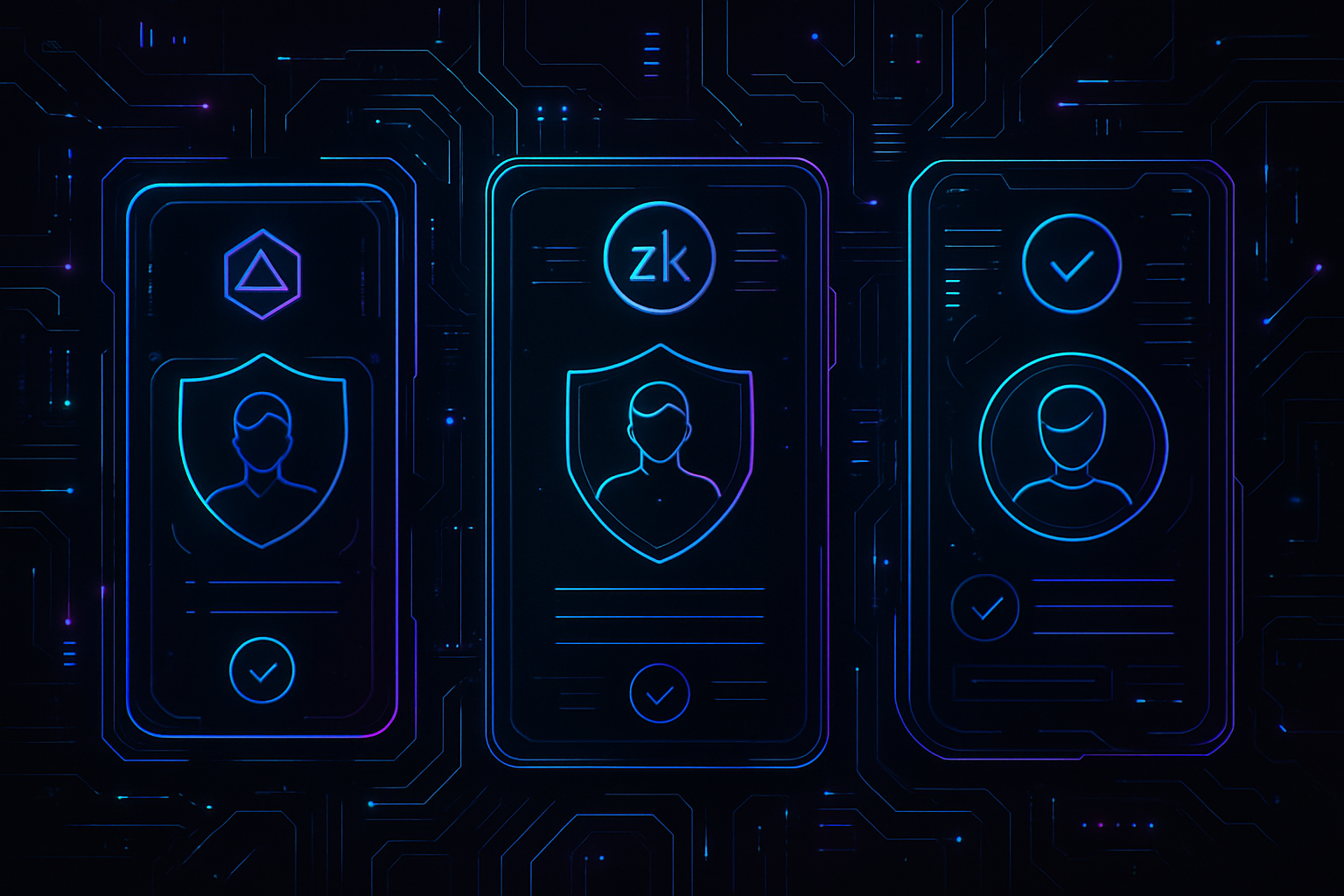
Zero-knowledge proofs (ZKPs) are rapidly reshaping the landscape of decentralized identity, providing a cryptographic backbone for privacy-preserving digital credentials. In a world where personal data is increasingly at risk, ZKPs empower individuals to verify information about themselves without exposing sensitive details. This technology is at the core of the latest wave of zk identity wallets, which allow users to manage and prove aspects of their identity with unprecedented security and control.
What Makes Zero-Knowledge Proofs Essential for Decentralized Identity?
The fundamental promise of decentralized identity is self-sovereignty: putting users in charge of their own credentials and online presence. However, traditional digital ID systems often require over-disclosure, think sharing your full birthdate just to prove you're over 18. Zero-knowledge proofs solve this by enabling selective disclosure. For example, you can prove citizenship or age without revealing any other identifying information.
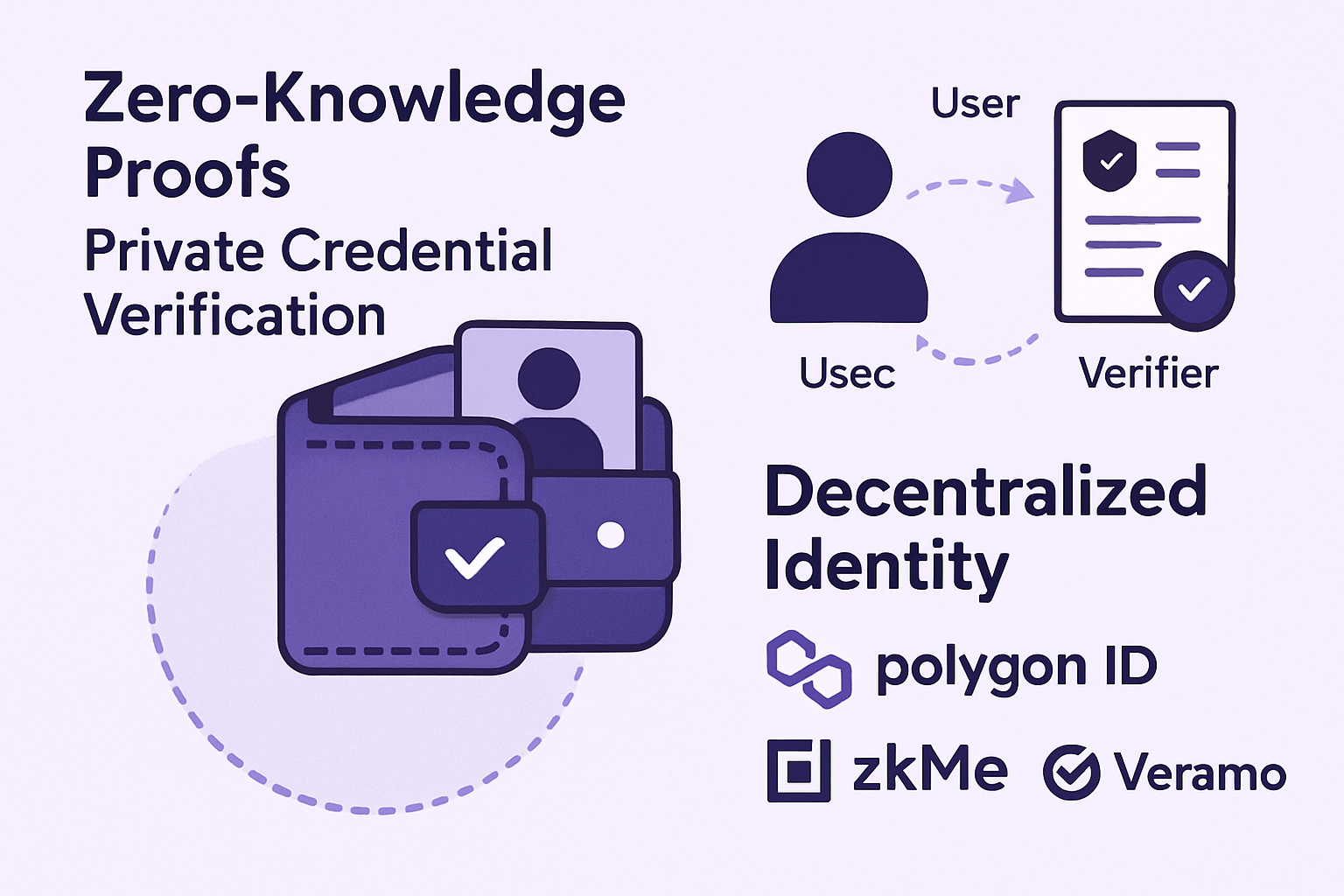
ZKPs accomplish this through an elegant cryptographic dance between two parties: the prover (you, holding your credential) and the verifier (a service or organization). The prover generates a cryptographic proof that a statement, such as “I am over 18”: is true, while the verifier can confirm its validity without ever seeing your actual birthdate or underlying document. This dramatically reduces data exposure risks and helps meet global privacy regulations like GDPR.
“Don’t trust when you can verify” has become the rallying cry for privacy advocates championing ZKP-powered authentication in decentralized systems.
Meet the Leaders: Three zk Identity Wallets Setting New Privacy Standards
Top Identity Wallets Using Zero-Knowledge Proofs
- Polygon ID Wallet: Built on the Polygon blockchain, Polygon ID Wallet leverages zero-knowledge proofs to enable self-sovereign identity and selective disclosure. Users can prove specific attributes (like age or residency) without revealing underlying personal data, ensuring privacy-preserving verification for decentralized applications.
- zkMe Identity Wallet: zkMe harnesses advanced zk-SNARKs to offer privacy-preserving digital identity verification. Its wallet allows users to authenticate and share credentials securely across platforms, using zero-knowledge proofs to minimize data exposure and support cross-border digital ID compliance.
- Veramo (with ZK Plugin): Veramo is a modular framework for decentralized identity, and its ZK Plugin adds support for zero-knowledge proof-based credential verification. This integration enables non-interactive, privacy-preserving authentication and selective disclosure of attributes, empowering users to control their digital identity across ecosystems.
Let’s look at three leading wallets that exemplify how ZKPs are being implemented in real-world decentralized identity solutions:
- Polygon ID Wallet: Built on Polygon’s scalable blockchain infrastructure, this wallet uses advanced ZKP circuits to enable self-sovereign identities. Users can prove eligibility criteria, like residency or age, without sharing unnecessary data with verifiers. Polygon ID is also designed for interoperability across Web3 platforms.
- zkMe Identity Wallet: zkMe takes privacy further by integrating non-interactive zero-knowledge proofs (NIZKPs). This means users can generate proofs that are reusable and verifiable offline, a critical feature for decentralized apps where real-time communication isn’t always possible.
- Veramo with ZK Plugin: Veramo is an open-source framework for building decentralized identity applications. Its ZK Plugin adds robust zero-knowledge proof capabilities, allowing developers to build custom workflows where users authenticate or share attributes privately while remaining fully in control of their data.
How Zero-Knowledge Proofs Work in Practice
The magic behind these wallets lies in their ability to facilitate privacy-preserving authentication. For instance, imagine using Polygon ID Wallet to access an online service requiring age verification. Instead of uploading a scanned ID card, which could be leaked or misused, you present a ZKP attesting you’re over 18. The verifier checks the proof’s validity but never learns your exact birthdate or sees your actual document.
This approach not only protects users from unnecessary data collection but also enhances security against phishing and social engineering attacks. Furthermore, solutions like zkLogin demonstrate how ZKPs can bridge off-chain identities (like Google or Facebook accounts) with on-chain authentication, without exposing user metadata on public blockchains.
Each of these zk identity wallets leverages zero-knowledge proofs to enable selective disclosure and minimal trust in digital interactions. This means users can confidently interact with services, organizations, or even other individuals, knowing that their most sensitive information remains private and under their exclusive control. The result is a dramatic reduction in the risk of data leaks, identity theft, and unauthorized surveillance.
Real-World Use Cases: From Web3 Access to Cross-Border Compliance
Zero-knowledge proof-powered wallets are already being adopted in a variety of practical scenarios:
- Web3 onboarding: Polygon ID Wallet allows seamless entry into decentralized applications (dApps), DAOs, and token-gated communities by proving eligibility without exposing your wallet address or real-world identity.
- KYC-free DeFi: zkMe Identity Wallet enables users to participate in decentralized finance protocols by proving jurisdiction or compliance status, without submitting personal documents to centralized exchanges.
- Cross-border digital ID verification: With Veramo’s ZK Plugin, users can prove nationality or residency for international services while keeping other attributes confidential, helping organizations comply with privacy regulations like GDPR.
This privacy-centric approach is especially crucial as digital identity becomes foundational for everything from online voting and healthcare access to metaverse avatars and NFT marketplaces. By keeping user data off-chain and only sharing cryptographic proofs, zk identity wallets minimize attack surfaces and foster trustless ecosystems.
Challenges and the Road Ahead for zk Identity Wallets
While the benefits are clear, integrating zero-knowledge proofs into decentralized identity wallets isn’t without hurdles. Performance overheads from complex cryptography can impact user experience if not optimized. Interoperability between different DID standards and ZKP schemes remains a work in progress, though open-source communities around projects like Veramo are accelerating this effort. User education is also vital; individuals need intuitive interfaces that clearly communicate what’s being shared (or not) during each interaction.
The good news is that innovation is moving fast. Initiatives like Polygon ID’s cross-platform compatibility, zkMe’s focus on non-interactive proofs for offline use cases, and Veramo’s modular plugin architecture are all pushing the boundaries of what’s possible. As these tools mature, expect broader adoption across sectors where privacy-preserving digital identity is paramount.
Why Zero-Knowledge Proofs Are the Future of Digital Identity
The trajectory is clear: as regulatory scrutiny increases and consumers demand more control over their digital presence, solutions built on zero-knowledge proofs will be at the heart of next-generation identity infrastructure. Polygon ID Wallet, zkMe Identity Wallet, and Veramo with ZK Plugin exemplify this shift, showcasing how cryptography can empower individuals without sacrificing usability or compliance.
If you’re serious about safeguarding your online credentials while participating in the expanding world of Web3 and self-sovereign identity, exploring these wallets should be your next step. Zero-knowledge proof technology isn’t just a buzzword, it’s becoming the standard for privacy-preserving digital interactions across borders and industries alike.



No comments yet. Be the first to share your thoughts!