
What on-chain identity actually means
On-chain identity is the digital representation of an individual or entity on a blockchain, linking real-world attributes to a blockchain address through cryptographic proofs. Unlike traditional pseudonymity, where an address is merely a random string of characters with no inherent connection to a person, on-chain identity establishes a verifiable link between the digital wallet and the legal identity behind it.
This distinction is critical for compliance. On-chain identity verification does not require exposing sensitive personal data to the public ledger. Instead, it uses zero-knowledge proofs or similar cryptographic methods to allow users to prove eligibility—such as age, residency, or regulatory status—without revealing the underlying information. This approach satisfies legal requirements for Know Your Customer (KYC) and Anti-Money Laundering (AML) checks while preserving user privacy.
By anchoring identity to the blockchain, organizations can create a trust layer that facilitates regulated financial activities, such as decentralized finance (DeFi) participation, without compromising the core principles of decentralization. This framework transforms blockchain addresses from anonymous tools into recognized digital passports, enabling seamless interaction with traditional financial systems while maintaining the security and transparency inherent to distributed ledger technology.
How the trust triangle works
On-chain identity verification links real-world identity attributes or digital reputation to a blockchain address using cryptographic proofs. This process relies on a three-party framework known as the trust triangle, involving the issuer, the holder, and the verifier. This structure ensures that sensitive personal data remains private while still satisfying regulatory requirements.
The issuer is a trusted entity, such as a government agency or a certified identity provider, that verifies an individual’s credentials. Once verified, the issuer signs a digital credential and sends it to the user. This credential is not stored on the public blockchain in a way that reveals personal details; instead, it is secured in the user’s digital wallet.
The holder is the individual or entity that owns the credential. They maintain control over their data, deciding which pieces of information to share and with whom. This self-sovereign model shifts power away from centralized databases, reducing the risk of large-scale data breaches.
The verifier is the service or protocol requesting proof of identity. Rather than asking for the raw data, the verifier requests a cryptographic proof that the holder possesses a valid credential from a trusted issuer. The holder generates this proof using zero-knowledge or selective disclosure techniques, revealing only the necessary information—such as age or residency status—without exposing the underlying document.
This triangular relationship creates a secure, privacy-preserving system. The issuer attests to the truth, the holder controls the access, and the verifier validates the claim without needing to store or trust the holder directly. This mechanism forms the technical backbone of compliant Web3 interactions, allowing platforms to enforce KYC and AML rules without compromising user privacy.
Key use cases for compliance and access
On-chain identity has moved beyond experimental prototypes to become a functional layer for regulatory compliance and market access. By anchoring identity to the blockchain, protocols can enforce Know Your Customer (KYC) and Anti-Money Laundering (AML) requirements without surrendering user privacy to centralized databases. This architecture allows for verifiable credentials that remain under the holder’s control while satisfying legal obligations.
Regulatory compliance and KYC/AML
Traditional compliance models require users to upload sensitive personal data to centralized servers, creating significant security liabilities. On-chain identity shifts this dynamic by using zero-knowledge proofs and decentralized identifiers (DIDs). Users can prove they meet specific regulatory criteria—such as age, residency, or accreditation status—without revealing the underlying data. This approach aligns with the principles of data minimization, reducing the attack surface for breaches while maintaining auditability for regulators.
Access to regulated financial products
The primary economic driver for on-chain identity is the ability to participate in regulated digital asset markets. Platforms offering security tokens, staking services, or institutional-grade DeFi products require strict adherence to jurisdictional laws. On-chain identity solutions, such as those developed by Tokeny, enable these platforms to verify user status in real-time. This verification is necessary to prevent unauthorized access to restricted assets and to ensure that only accredited or qualified investors can transact.
Decentralized governance participation
Beyond financial access, on-chain identity facilitates robust governance in decentralized autonomous organizations (DAOs). It prevents sybil attacks by ensuring that voting power is tied to unique, verified human participants rather than multiple fabricated accounts. This verification is critical for the legitimacy of governance outcomes, particularly when decisions involve treasury management or protocol upgrades. By linking identity to governance rights, projects can maintain a balance between decentralization and accountability.
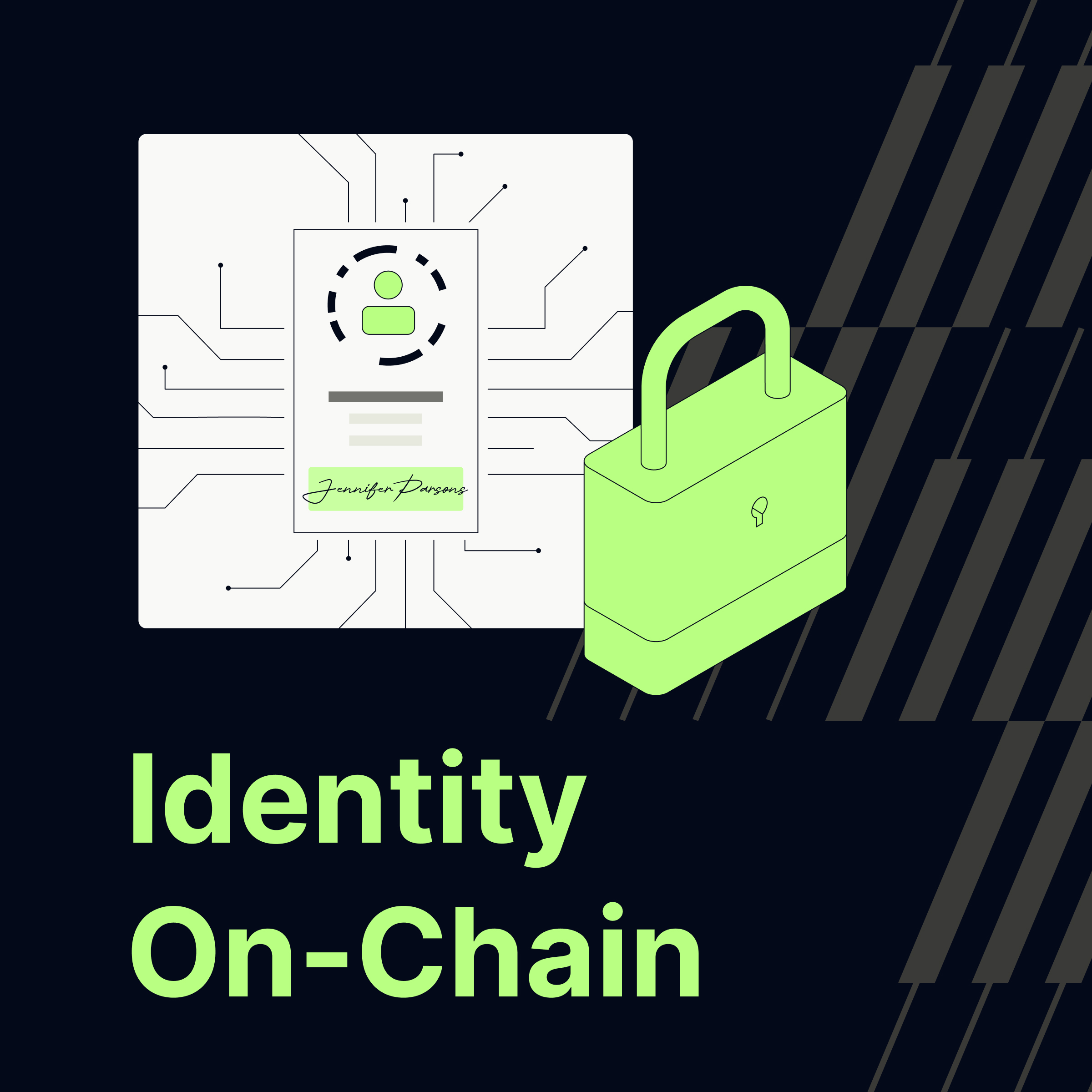
| Feature | Traditional KYC | On-Chain Identity |
|---|---|---|
| Data Storage | Centralized servers | User-controlled wallets |
| Privacy | Minimal; full data exposure | High; zero-knowledge proofs |
| Compliance | Static, periodic audits | Real-time, continuous |
| Security | High breach risk | Distributed, cryptographically secure |
Privacy-first design principles
On-chain identity systems are shifting from centralized data hoarding to privacy-first architectures that satisfy regulatory mandates without exposing raw personal data. This transition relies on two core technologies: zero-knowledge proofs (ZKPs) and self-sovereign identity (SSI). Together, they allow users to prove compliance attributes—such as age, jurisdiction, or accreditation status—without revealing the underlying documents or identity trails.
Zero-knowledge proofs enable a user to demonstrate that a statement is true without revealing any information beyond the validity of the statement itself. In a compliance context, this means a user can prove they are over 18 or reside in a permitted region without disclosing their birth date or home address. This capability is critical for regulations like the EU’s MiCA and the US Bank Secrecy Act, which require identity verification but do not mandate the collection of unnecessary personal data. By minimizing data exposure, ZKPs reduce the attack surface for identity theft and limit the liability for both users and service providers.
Self-sovereign identity complements this by giving users direct control over their digital credentials. Instead of storing data in a central database owned by a centralized exchange or platform, SSI allows individuals to hold verifiable credentials in their own wallets. These credentials are issued by trusted authorities, such as governments or accredited KYC providers, and can be selectively shared with third parties. This model aligns with the principle of data minimization, ensuring that only the specific data required for a transaction or service is accessed.
The combination of ZKPs and SSI creates a robust framework for on-chain compliance. It allows regulated entities to perform necessary due diligence while respecting user privacy. As regulatory clarity improves, this privacy-first approach is becoming the standard for sustainable Web3 growth, balancing legal obligations with the decentralized ethos of the industry.
Navigating the 2026 regulatory landscape
The 2026 regulatory environment demands a shift from reactive reporting to proactive, on-chain verification. Global frameworks now require digital service providers to validate user identities before granting access to financial services, creating a non-negotiable standard for compliance.
On-chain identity serves as the technical bridge between Web3 innovation and these legal requirements. By anchoring verified credentials to decentralized identifiers (DIDs), platforms can prove compliance without exposing sensitive personal data. This approach transforms identity from a liability into a verifiable asset.
Official documentation defines an Identity Object as a shared structure that stores a DID Document on the network. This allows both on-chain and off-chain actors to interact with verified status seamlessly. The result is a system where trust is programmable, ensuring that regulatory obligations are met at the protocol level rather than through opaque third-party intermediaries.
No comments yet. Be the first to share your thoughts!