
What onchain passport actually does
Onchain Passport is a verifiable credential system that replaces traditional identity databases with cryptographic attestations. Rather than storing personal data in centralized servers, the system uses the Ethereum Attestation Service (EAS) to publish identity stamps directly onto the blockchain. This approach ensures that compliance proofs are tamper-evident and independently verifiable by any third party without relying on a single point of failure.
The core mechanism involves linking verified human stamps to a wallet address. These stamps are recorded as onchain events, creating an immutable history of identity verification. This structure allows compliance officers to audit identity claims directly from the ledger, reducing the need for manual document review and minimizing the risk of data breaches associated with traditional KYC databases.
By shifting identity storage to the blockchain, Onchain Passport aligns with zero-knowledge principles where necessary, allowing users to prove eligibility without exposing sensitive personal information. This distinction is critical for regulatory compliance, as it limits the liability of service providers who no longer hold raw identity data. For detailed technical specifications on the smart contract implementation, refer to the Human Passport documentation.
Onchain passport vs centralized kyc
The fundamental divergence between OnChain Passport and traditional KYC providers like SumSub or Jumio lies in data sovereignty. Legacy providers operate as centralized data vaults, requiring issuers to transfer personally identifiable information (PII) to a third-party processor. In this model, the investor’s identity is stored on the provider’s servers, creating a single point of failure and a target for regulatory subpoena or data breach. OnChain Passport, by contrast, utilizes a decentralized architecture where the user retains custody of their credentials. The identity document is not stored on-chain; rather, a cryptographic proof of compliance is generated and verified without exposing the underlying raw data to the platform.
Privacy preservation is the second critical differentiator. Traditional KYC workflows often require the full disclosure of sensitive documents—passports, utility bills, and proof of residence—to every intermediary involved in a transaction. This "data dumping" approach increases liability for both the issuer and the investor. OnChain Passport employs zero-knowledge proof (ZKP) technologies or selective disclosure mechanisms. This allows an investor to prove they meet specific regulatory criteria (such as being accredited or residing in an approved jurisdiction) without revealing their name, address, or exact birthdate to the counterparty. The data remains encrypted in the user’s wallet, accessible only via explicit consent.
User experience and operational efficiency also differ significantly. Centralized KYC services typically involve a linear, manual review process that can take several days. Each new investment opportunity requires a fresh submission, leading to repetitive friction and abandoned onboarding flows. OnChain Passport enables a "verify once, use everywhere" model. Once the identity is verified and the credential is minted or stored in the user’s digital wallet, it can be reused across multiple platforms that recognize the standard. This reduces onboarding time from days to minutes and lowers the recurring compliance costs for asset issuers.
The following comparison outlines the technical and operational distinctions between these two approaches.
| Feature | OnChain Passport | Centralized KYC |
|---|---|---|
| Data Ownership | User-controlled (Self-sovereign) | Provider-controlled (Custodial) |
| PII Storage | Encrypted in user wallet | Centralized cloud servers |
| Data Sharing | Selective disclosure / ZKPs | Full document transfer |
| Reusability | Universal across compatible platforms | Per-platform verification required |
| Verification Speed | Minutes (automated) | Days (manual review) |
| Regulatory Liability | Shared / User-assisted | Provider-assumed |
While OnChain Passport offers superior privacy and efficiency, it introduces complexity in terms of user education and wallet management. Traditional KYC providers offer a familiar, high-touch support experience that may be preferable for retail investors who are not yet comfortable with self-custody. However, for institutional and sophisticated retail participants, the shift toward self-managed identity is becoming a compliance necessity to mitigate systemic data risk.
How privacy preserving KYC works on chain
Traditional KYC requires uploading sensitive documents—such as passports and utility bills—to centralized servers, creating a single point of failure for identity theft. On-chain KYC replaces this model with privacy-preserving cryptography, primarily zero-knowledge proofs (ZKPs) and selective disclosure. These mechanisms allow users to prove they meet regulatory criteria without revealing the underlying personal data on the public ledger.
Zero-Knowledge Proofs
Zero-knowledge proofs enable a user to generate a cryptographic proof that demonstrates compliance—such as being over 18 or residing in a specific jurisdiction—without exposing the raw data itself. In this model, the blockchain records only the proof, not the identity document. A verifier can mathematically confirm the proof is valid without ever seeing the passport number or birth date. This ensures that even if the blockchain is public and immutable, the user’s sensitive information remains private. The Human Passport protocol utilizes Ethereum Attestation Service (EAS) to anchor these verifiable attestations, ensuring that the cryptographic validity of the claim is transparent while the data payload is not.
Selective Disclosure
Selective disclosure allows users to choose exactly which data points to share with a service provider. Instead of submitting a full identity document, the user can present a tokenized credential that verifies a specific attribute, such as "KYC Verified" or "Sanctions List Cleared." This approach minimizes data exposure by adhering to the principle of data minimization, a core requirement under regulations like the GDPR. By sharing only what is necessary for the transaction or service, users reduce their attack surface and maintain greater control over their digital identity.

When to use decentralized identity standards
Decentralized identity standards like OnChain Passport excel in environments where speed, privacy, and user sovereignty are prioritized over strict regulatory oversight. These systems are best suited for permissionless DeFi protocols, airdrop eligibility checks, and cross-chain governance participation. In these contexts, the ability to present a zero-knowledge proof of accreditation without revealing underlying personal data reduces friction for users and minimizes liability for platforms.
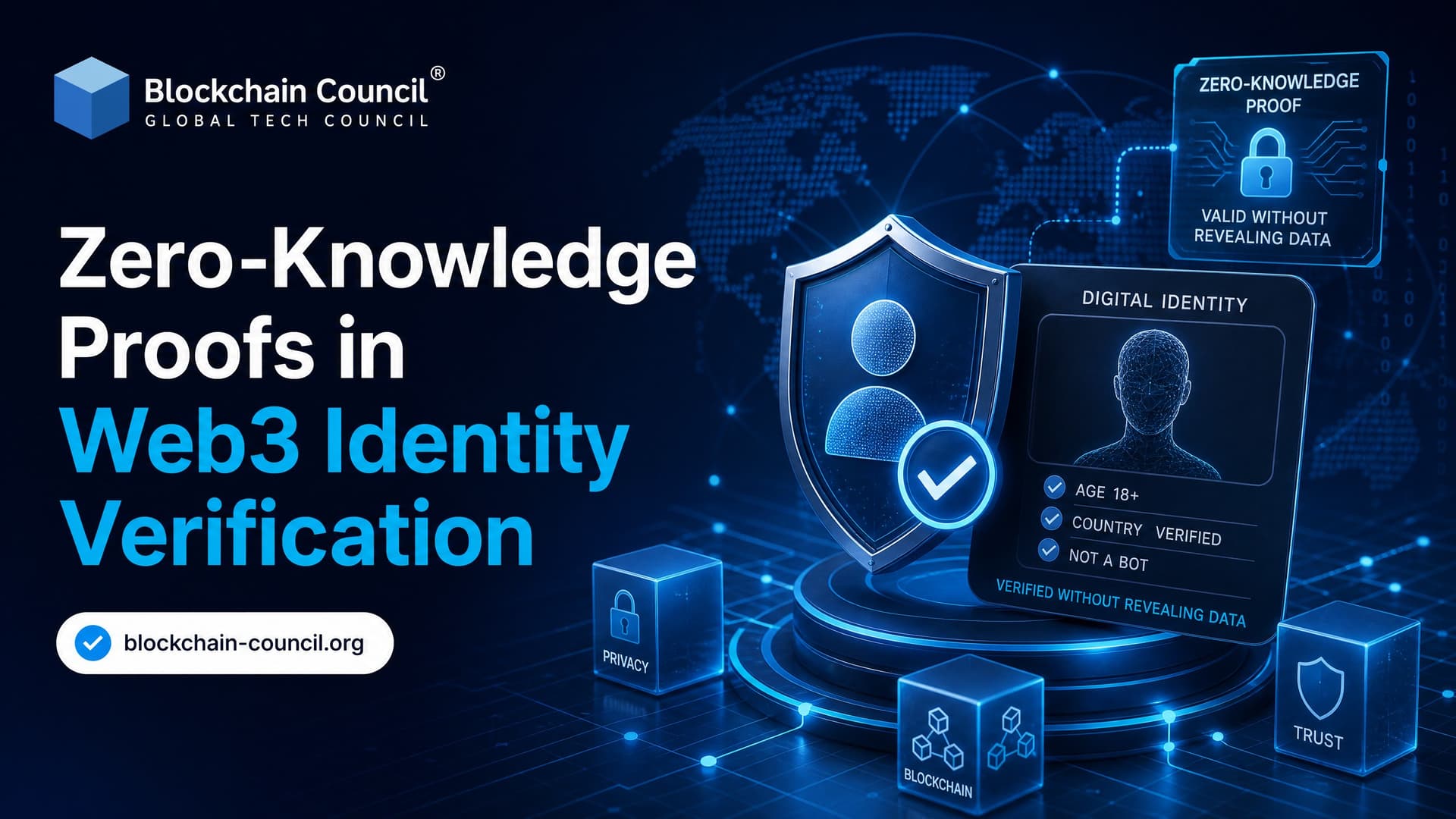
For permissionless lending or yield protocols, OnChain Passport allows users to prove they are accredited or non-US persons without submitting sensitive documents to a central server. This aligns with the self-custodial ethos of DeFi while maintaining a baseline of compliance through verifiable credentials.

Projects distributing tokens can use these standards to filter out bots and sybil attackers. By requiring a verified human passport, protocols ensure that rewards go to genuine participants, reducing the need for costly manual reviews.
However, traditional KYC remains necessary for fiat on-ramps, centralized exchanges, and any interaction with the regulated banking system. These entities are legally bound to collect and store specific identity data (name, address, DOB) under AML/CFT regulations. OnChain Passport cannot currently replace the legal obligation of a centralized entity to verify identity against government-issued IDs for fiat transactions.

The decision ultimately depends on the asset class. If the asset is a digital token with no immediate fiat redemption path, decentralized identity offers a more efficient and private compliance layer. If the asset is a security or involves direct fiat conversion, traditional KYC processes remain the only compliant path.
-
Your platform is non-custodial and permissionless
-
You need to verify accreditation without storing PII
-
The use case is airdrop eligibility or governance
-
You operate in a jurisdiction with clear digital asset frameworks
For platforms navigating this hybrid landscape, understanding the technical limits of decentralized identity is crucial. While it streamlines user experience, it does not absolve platforms of all regulatory duties, particularly when fiat entry points are involved.
Frequently asked: what to check next
The intersection of onchain identity and traditional compliance frameworks often generates specific technical and regulatory queries. The following questions address common points of confusion regarding hardware security, digital storage mechanics, and jurisdictional considerations.
No comments yet. Be the first to share your thoughts!