
What is an onchain passport
An onchain passport is a verifiable, immutable record of identity attributes stored directly on a blockchain. Unlike traditional centralized databases where identity is managed by a single authority, an onchain passport operates as a tamper-proof credential that the user controls. This structure enables self-sovereign identity, allowing individuals to prove specific attributes—such as human status or reputation scores—without revealing unnecessary personal data.
The primary mechanism involves minting identity data on-chain, creating a permanent and transparent record. This approach is critical for applications requiring sybil resistance, as it ensures that identity claims are backed by cryptographic proof rather than opaque internal logs. According to the official documentation from passport.xyz, minting your passport onchain creates this tamper-proof record, which is specifically required for applications that fetch Passport data directly from the blockchain.
This technology distinguishes itself from conventional identity systems by removing the central point of failure. Instead of relying on a corporate server to verify who you are, the blockchain serves as the source of truth. This shift supports the broader goals of Proof of Personhood tools, protecting users from bad actors both onchain and offchain by ensuring that identity credentials are secure, portable, and resistant to manipulation.
How stamps build reputation
Onchain Passport aggregates stamps—verification proofs from various providers—to form a composite score. Think of a stamp as a single credential, similar to a driver’s license or a utility bill. When you connect a provider like Gitcoin, Twitter, or a wallet-based service, the system verifies that specific attribute and issues a stamp to your identity. This modular approach means you are not locked into a single identity provider; you can accumulate proofs from multiple sources to build a more robust digital reputation.
These individual stamps are not stored as a single static profile. Instead, they are aggregated into a Passport score. This score is calculated based on the number of stamps you hold, the type of provider, and the level of trust associated with each verification. The system is designed to be sybil-resistant, meaning it aims to ensure that one person does not create multiple identities to game the system. Official documentation emphasizes that this scoring mechanism helps applications distinguish between unique humans and automated bots.
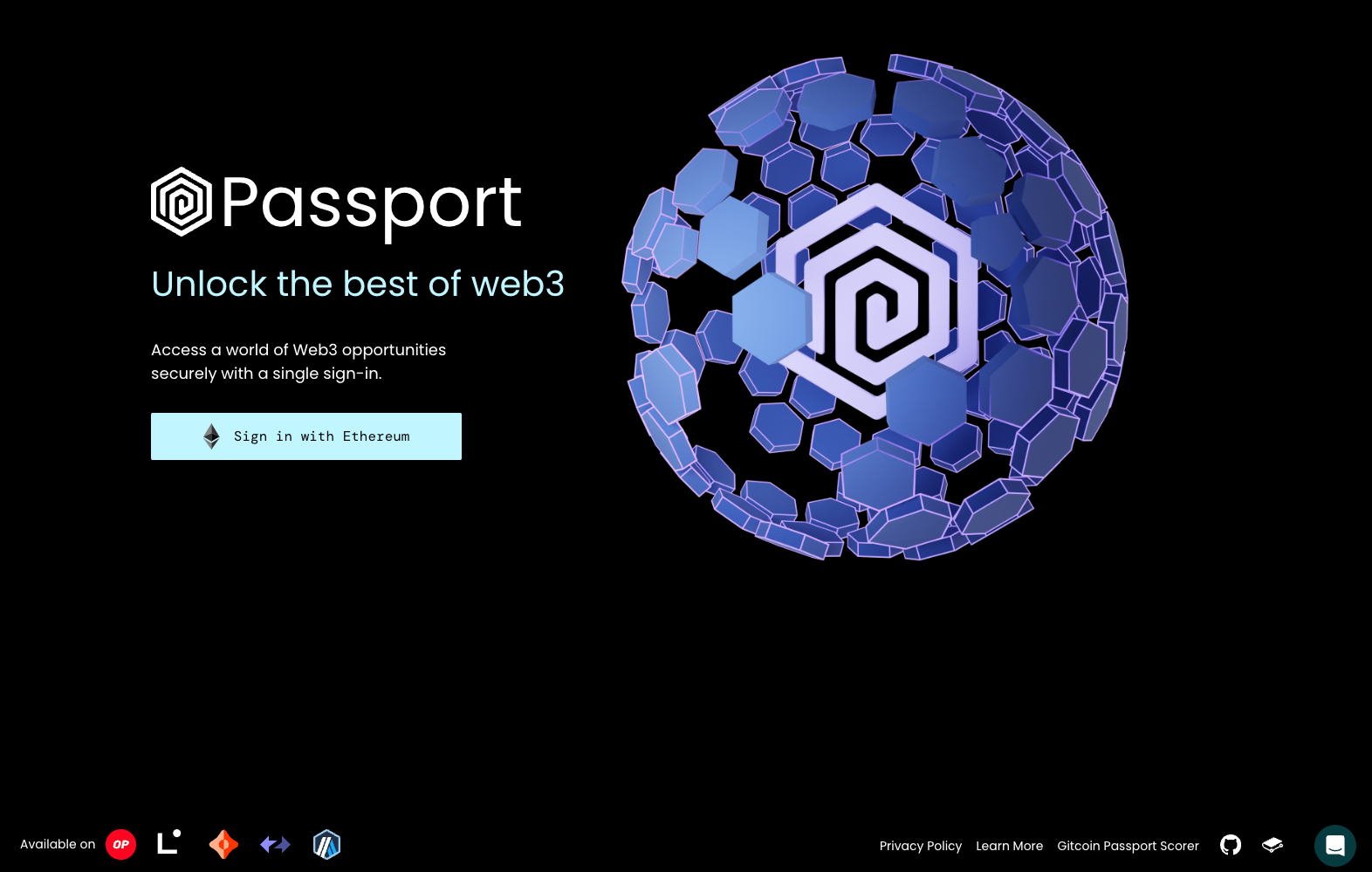
Once your Passport is minted onchain, it creates a tamper-proof record of your verification status. This onchain record is essential for applications that need to fetch your Passport data directly from the blockchain. It allows dApps to verify your identity without relying on centralized databases, ensuring that your reputation is portable and secure. The image below illustrates how different stamps contribute to the overall Passport structure.
Sybil resistance and AI agents
Sybil resistance is the mechanism by which onchain passports verify that a digital identity belongs to a unique human rather than a fabricated or automated account. In decentralized ecosystems, this concept—often called Proof of Personhood—prevents a single actor from creating multiple identities to manipulate governance votes, distribute rewards unfairly, or flood platforms with spam.
The challenge has intensified with the rise of AI agents. Unlike traditional bots, modern AI models can generate convincing text, mimic human writing styles, and operate autonomously at scale. This capability makes it easier for bad actors to create "zombie" accounts that appear legitimate to basic verification systems. Without robust sybil resistance, these agents could dominate discussions, drain airdrop liquidity, or skew onchain governance outcomes.
Onchain passports address this by aggregating diverse data points—such as GitHub activity,ENS ownership, or transaction history—to build a reputation score. This score acts as a trust signal, distinguishing humans from AI-driven spam. By requiring a minimum score for participation, protocols ensure that human-centric governance remains fair and that resource distribution is not captured by automated scripts.
For developers and protocol designers, integrating sybil resistance is no longer optional but essential for integrity. Official documentation from providers like Human Passport emphasizes that these tools protect users from bad actors both onchain and offchain. By leveraging these standards, projects can maintain the quality of their community interactions and ensure that their systems remain resilient against automated abuse.
Decentralized Identifiers and Verifiable Credentials
The foundation of an onchain passport rests on two W3C standards: Decentralized Identifiers (DIDs) and Verifiable Credentials (VCs). Together, they replace traditional username-password systems with a cryptographic framework that you control.
A DID is a unique identifier that you own and manage without relying on a central registry. It acts as a permanent address on the blockchain, linking to a DID Document that defines how to authenticate yourself. This document contains public keys and service endpoints, allowing applications to verify your identity without exposing your private data.
Verifiable Credentials are the digital equivalent of physical credentials like a driver’s license or university degree. Issuers—such as governments or decentralized protocols—sign these credentials cryptographically. When you present a VC to an app, the app verifies the signature against the issuer’s public key, confirming the information is authentic and unaltered.
Interoperability ensures these standards work across different wallets and blockchains. By adhering to W3C specifications, an onchain passport can function seamlessly whether you are using MetaMask, Coinbase Wallet, or a hardware device. This universal compatibility is what transforms a simple wallet address into a portable, self-sovereign identity.
Costs and gas fees for minting
Minting your Passport onchain creates a permanent, tamper-proof record of your identity directly on the blockchain. This step is not mandatory for general use; it is only required if you are interacting with decentralized applications (dApps) that specifically fetch Passport credentials on-chain. If a dApp does not require on-chain verification, you can use your Passport without incurring blockchain transaction costs.
When you do choose to mint, you will pay gas fees to the network. These fees vary depending on the blockchain you select (such as Polygon, Base, or Ethereum) and current network congestion. The cost is typically small but non-zero, representing the computational effort to write the credential to the ledger. This process transforms your Passport from a local, off-chain credential into a verifiable on-chain asset.
The primary utility of minting is integration. Many dApps use on-chain checks to prevent Sybil attacks or to verify eligibility for specific rewards. By having your Passport on-chain, you allow these applications to programmatically verify your identity without requiring you to re-authenticate or share sensitive data repeatedly. It acts as a trusted anchor for your digital reputation across compatible platforms.
For most users, the decision to mint comes down to the specific requirements of the dApps you plan to use. If you are only browsing or using services that support off-chain verification, you can skip the minting step entirely. However, for deeper participation in the decentralized web, having an on-chain Passport is often a prerequisite for accessing certain features or communities.
No comments yet. Be the first to share your thoughts!