
What is an OnChain Passport?
An OnChain Passport is a reusable, user-controlled identity layer that replaces repetitive KYC forms with verifiable credentials on the blockchain. Instead of submitting sensitive personal data to every new platform, you verify your identity once and share only the necessary proofs—such as accreditation status or residency—across multiple services.
Think of it like a digital driver’s license stored in your wallet. You don’t give away your entire file to a bouncer; you simply show proof that you’re over 21. Similarly, an OnChain Passport allows you to prove you are a qualified investor or a real human without exposing your full financial history to every dApp or exchange.
By shifting control from centralized institutions to the user, OnChain Passports reduce friction for legitimate investors while maintaining strict regulatory compliance. Solutions like Tokeny’s ONCHAINID and Verify Investor’s On-ChainPass demonstrate how this technology eliminates manual checks, allowing for seamless, secure, and private interactions across the Web3 ecosystem.
How decentralized identity solves KYC friction
Traditional Know Your Customer (KYC) processes force users to upload sensitive documents—passports, utility bills, and facial scans—to multiple centralized servers. This creates a fragmented data landscape where every new platform requires a fresh round of verification, increasing the risk of data breaches and identity theft. The OnChain Passport model shifts this paradigm by treating identity as a portable, user-controlled asset rather than a static record held by an institution.
The mechanism relies on decentralized identity standards, specifically Verifiable Credentials (VCs). Instead of handing over raw data, users verify their identity once with a trusted provider. The provider issues a cryptographically signed credential that the user stores in their wallet. This credential acts as a digital passport, allowing the user to prove specific attributes without revealing the underlying personal information.
1. Initial Verification and Credential Issuance
The process begins with a single interaction with a trusted issuer. The user submits their identity documents to the issuer, who verifies them against official records. Once confirmed, the issuer creates a Verifiable Credential containing specific claims—such as "human," "over 18," or "not sanctioned." This credential is signed by the issuer’s private key and stored on-chain or in a decentralized storage layer, ensuring its authenticity and immutability. The user now holds a verifiable proof of identity without exposing their raw data to the broader network.
2. Selective Disclosure of Proofs
When interacting with a dApp or service, the user does not share their entire identity profile. Instead, they generate a zero-knowledge proof or use selective disclosure to reveal only the necessary information. For example, to access a regulated financial service, the user might prove they are over 18 and not on a sanctions list without revealing their name, address, or date of birth. This minimizes data exposure and reduces the attack surface for potential breaches.
3. On-Chain Verification and Smart Contract Integration
The receiving platform verifies the proof by checking the issuer’s signature against the public key stored on the blockchain. Smart contracts can automatically enforce compliance rules based on these verified credentials. As noted in the Human Passport documentation, onchain functionality enables users to store their verified Stamps and scores, making this data available via smart contracts for automated decision-making. This eliminates the need for manual review and allows for real-time, permissionless compliance.

Submit documents to a trusted issuer. Receive a signed Verifiable Credential stored in your wallet.

Use zero-knowledge proofs to reveal only necessary attributes (e.g., age, jurisdiction) to the dApp.
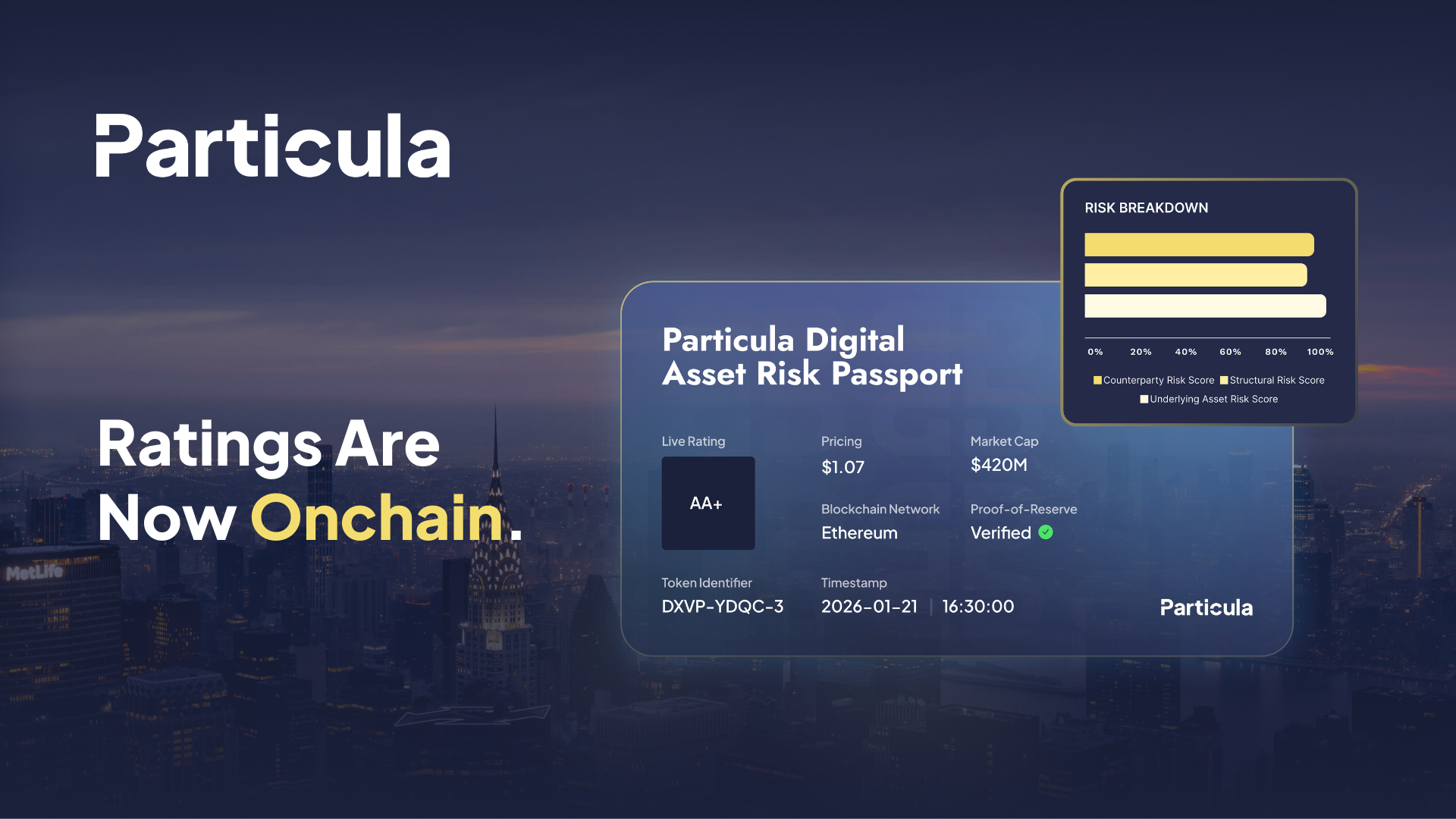
The platform verifies the issuer’s signature on-chain and grants access based on predefined compliance rules.
This approach transforms KYC from a repetitive, data-heavy burden into a streamlined, privacy-preserving interaction. By leveraging decentralized identity, the OnChain Passport ensures that users retain ownership of their data while meeting regulatory requirements efficiently.
Comparing leading OnChain Passport providers
The OnChain Passport landscape is fragmenting into distinct categories based on compliance focus and privacy architecture. Selecting the right provider depends on whether you prioritize regulatory alignment for institutional assets or identity verification for decentralized applications.
Gitcoin Passport
Gitcoin Passport operates as a reputation protocol rather than a traditional KYC provider. It aggregates "stamps" from various sources—such as GitHub activity, ENS ownership, and government IDs—to generate a humanity score. This model is ideal for dApps needing to prevent sybil attacks or ensure unique participation.
The primary advantage is privacy; users retain ownership of their data and only share a score, not raw documents. However, it lacks direct regulatory alignment with frameworks like MiCA or SEC regulations, making it unsuitable for compliance-heavy financial products.
Tokeny ONCHAINID
Tokeny ONCHAINID is built specifically for the regulated tokenization market. It functions as a reusable, self-managed investment passport that integrates directly with Tokeny’s issuance platform. It is designed to streamline KYC/AML checks for security tokens, ensuring that only verified investors can participate in regulated offerings.
This solution offers strong regulatory alignment, particularly for European markets under MiCA. It is targeted at institutional issuers and platforms dealing with fractionalized real-world assets, offering a more formalized compliance layer than reputation-based systems.
Verify Investor On-ChainPass
Verify Investor’s On-ChainPass provides a blockchain-based verification layer that eliminates repetitive paperwork for investors. It focuses on creating a persistent, tokenized identity that can be reused across multiple platforms, reducing friction in the investor onboarding process.
This provider targets both retail and institutional investors seeking efficiency in compliance workflows. It bridges the gap between traditional KYC processes and on-chain verification, offering a middle ground for platforms that need robust identity proof without full institutional-grade infrastructure.
Comparison Overview
The table below summarizes the key differences between these leading OnChain Passport solutions to help you choose the right fit for your project.
| Provider | Privacy Model | Regulatory Alignment | Target Audience | Integration Complexity |
|---|---|---|---|---|
| Gitcoin Passport | Reputation Score (No Raw Data) | None (Sybil Resistance) | dApps, Web3 Communities | Low |
| Tokeny ONCHAINID | Self-Managed KYC Data | MiCA, SEC (Tokenization) | Institutional Issuers | High |
| Verify Investor | Tokenized Identity Proof | General KYC/AML | Retail & Institutional | Medium |
How OnChain Passport balances privacy and compliance
The central tension in Web3 regulation is straightforward: regulators need to verify that users are not engaging in illicit activity, while users want to keep their transaction history private. The OnChain Passport solves this by shifting the verification model from centralized data storage to cryptographic proof. Instead of handing over a full identity dossier to every exchange or dApp, users prove they meet specific criteria without revealing the underlying data.
This is made possible by zero-knowledge proofs (ZKPs). A ZKP allows a user to demonstrate that a statement is true without revealing any information beyond the validity of the statement itself. In the context of an OnChain Passport, this means a user can prove they are over 18, reside in a non-sanctioned country, or have a clean AML history without exposing their name, address, or transaction ledger to the verifier. The result is selective disclosure, where only the minimum necessary data is shared to satisfy a compliance check.
The technical implementation relies on onchain stamps and scores. As detailed in the Human Passport documentation, developers can build smart contracts that retrieve and verify this data. These contracts check the cryptographic proofs against the user’s public onchain identity. If the proof holds, the contract grants access or permission; if not, it denies it. This creates a trustless environment where compliance is automated and privacy is preserved by design.
For businesses, this reduces the liability of holding sensitive user data. For users, it restores sovereignty. The OnChain Passport becomes a portable, user-controlled credential that works across jurisdictions and platforms, adhering to the evolving standards of 2026 without requiring constant re-verification.
Common OnChain Passport integration mistakes
Building an OnChain Passport integration often feels like wiring a dashboard, but identity is not a static database entry. It is a dynamic, revocable credential that changes as users complete new stamps or as their risk profiles shift. Treating it as a one-time lookup is the most frequent reason for failed deployments.
Storing PII on-chain
The ledger is public by design. Developers sometimes mistake the on-chain score or the hash of a verified stamp for sensitive personal data, but the off-chain metadata linked to those hashes can reveal identities. Storing any directly identifiable information on-chain violates privacy regulations and exposes users to doxxing risks. Always verify that your smart contract only stores cryptographic proofs or anonymized scores, never raw user data.
Ignoring credential expiration
A stamp verified today may be invalid tomorrow. If your platform does not actively check for expiration or revocation, you risk granting access to users who have lost their eligibility. This creates a compliance gap where your platform appears to verify identity but actually relies on stale data. Implement logic that re-validates scores against the latest provider data before granting access.
Locking into a single provider
Relying exclusively on one stamp provider creates a single point of failure. If that provider changes its API, raises its threshold, or experiences downtime, your entire user base loses access. A robust OnChain Passport integration supports multiple providers, allowing users to substitute one stamp for another to meet the required score. This flexibility ensures continuity even when individual providers adjust their verification standards.
Frequently asked questions about OnChain Passport
What is a Bitcoin Passport? Bitcoin.org lists Passport as an air-gapped, Bitcoin-only hardware wallet focused on sovereignty and open-source security. This is distinct from the identity verification tools discussed here, which use blockchain data to establish compliance rather than just store keys.
What are the benefits of Gitcoin Passport? Gitcoin Passport is a reputation system that allows users to prove they are unique humans without exposing raw personal data. It scores trustworthiness for decentralized applications (dApps) but does not inherently satisfy legal KYC or AML requirements for financial compliance.
What is the best passport for crypto compliance? Compliance tools like OnChain Passport aggregate on-chain activity, government IDs, and device signals to create a verifiable human identity. Unlike hardware wallets or reputation scores, these passports are designed specifically to meet regulatory standards in jurisdictions like the UAE, Switzerland, and Singapore.
No comments yet. Be the first to share your thoughts!