
For years, the digital identity landscape in Web3 has been hampered by fragmented Know Your Customer (KYC) processes and siloed identity solutions. Users are routinely forced to submit sensitive documents to multiple platforms, exposing themselves to privacy risks and data breaches. The introduction of idOS marks a pivotal shift: it offers a decentralized, chain-agnostic identity layer that enables one-time KYC and true self-sovereign identity across all blockchains. This innovation holds the potential to fundamentally reshape onboarding, compliance, and user autonomy in decentralized ecosystems.
The Problem: Fragmented KYC and Identity Silos in Web3
Traditional KYC procedures are not only repetitive but also inefficient. Each new decentralized application (dApp) or service requires users to resubmit their credentials, increasing onboarding friction while multiplying attack surfaces for personal data. These redundancies have become a major obstacle for both users and developers seeking seamless access across DeFi protocols, NFT platforms, social dApps, and beyond.
This fragmented approach is fundamentally at odds with the ethos of self-sovereign identity (SSI), which advocates for user control over personal information without reliance on centralized authorities. As privacy regulations tighten globally, the need for a robust yet flexible solution is more urgent than ever.
idOS: Chain-Agnostic Identity Layer for One-Time KYC
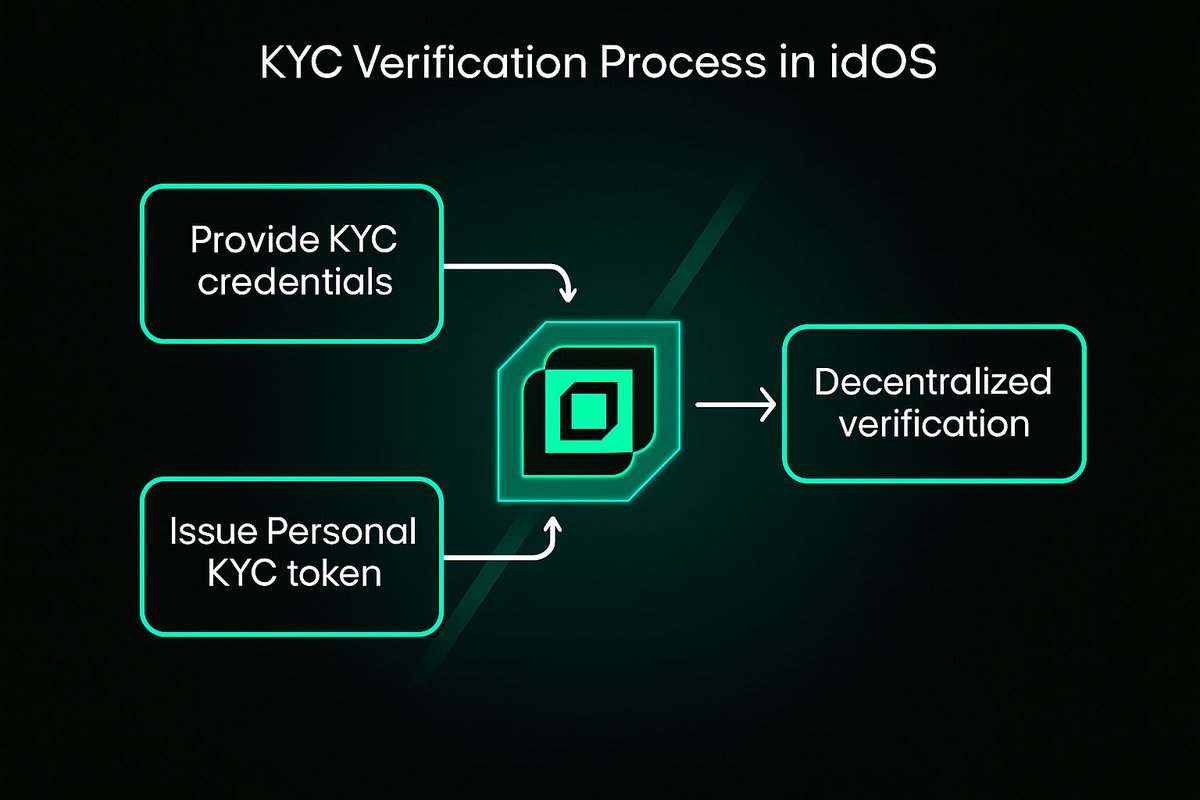
idOS addresses these challenges by introducing a decentralized infrastructure where users complete KYC verification once, then reuse their encrypted credentials seamlessly across any participating blockchain or dApp. At its core are several key features:
- One-Time KYC Verification: After an initial verification process, credentials are securely stored on the idOS network. Users can selectively share these with new platforms as needed, removing the need for repeated onboarding cycles.
- Self-Sovereign Control: Individuals retain ownership of their identity data. They decide who can access it and under what conditions, aligning with SSI principles while ensuring regulatory compliance when required.
- Decentralized Storage and Security: Data is distributed across a network of nodes rather than being held by a single provider. Even if one node fails or is compromised, user information remains safe and accessible elsewhere in the network.
- MPC Integration: Through Multi-Party Computation (MPC) technology, developed in collaboration with Partisia Blockchain, private keys are reconstructed only when necessary. This abstracts away complex key management from end-users while minimizing exposure risk.
- Interoperability: As a chain-agnostic solution, idOS operates seamlessly across Ethereum, Cosmos, Solana, Polkadot, and dozens of other networks, making it one of the most versatile digital ID frameworks available today.
This architecture not only streamlines compliance but also empowers users to reclaim agency over their digital presence, a critical advancement as Web3 matures into mainstream adoption. For more technical insights into how this works in practice, see our detailed analysis on idOS reusable KYC architecture.
User Benefits: Privacy-Preserving Portability and Frictionless Onboarding
The advantages for end-users are immediate and significant:
- Simplified Access: Complete KYC once; access dozens of dApps without further paperwork or delays.
- Enhanced Privacy: Share only what’s necessary, no more oversharing sensitive documents with every platform.
- User Autonomy: Full control over who accesses your data at all times; revoke permissions instantly if needed.
- No Central Point of Failure: Decentralized storage mitigates risks associated with traditional custodianship models.
This new paradigm not only reduces onboarding friction but also supports regulatory alignment by providing auditable proof of compliance without compromising user privacy. To explore additional use cases and integration strategies for developers and institutions alike, review our expanded guide on portable identity via idOS.
For developers and enterprises, integrating idOS offers a powerful toolkit for building compliant, user-friendly applications in an increasingly regulated environment. By tapping into a shared pool of pre-verified, self-sovereign users, projects can dramatically reduce onboarding costs and legal exposure while fostering trust with their communities. The modular design of idOS means it can be embedded into existing dApps with minimal disruption, supporting a wide range of use cases from DeFi lending protocols to NFT marketplaces and on-chain governance platforms.
Key Advantages of idOS for Web3 Identity Management
- One-Time KYC Verification: idOS enables users to complete KYC just once, securely storing their credentials for reuse across multiple dApps, eliminating repetitive onboarding and verification processes.
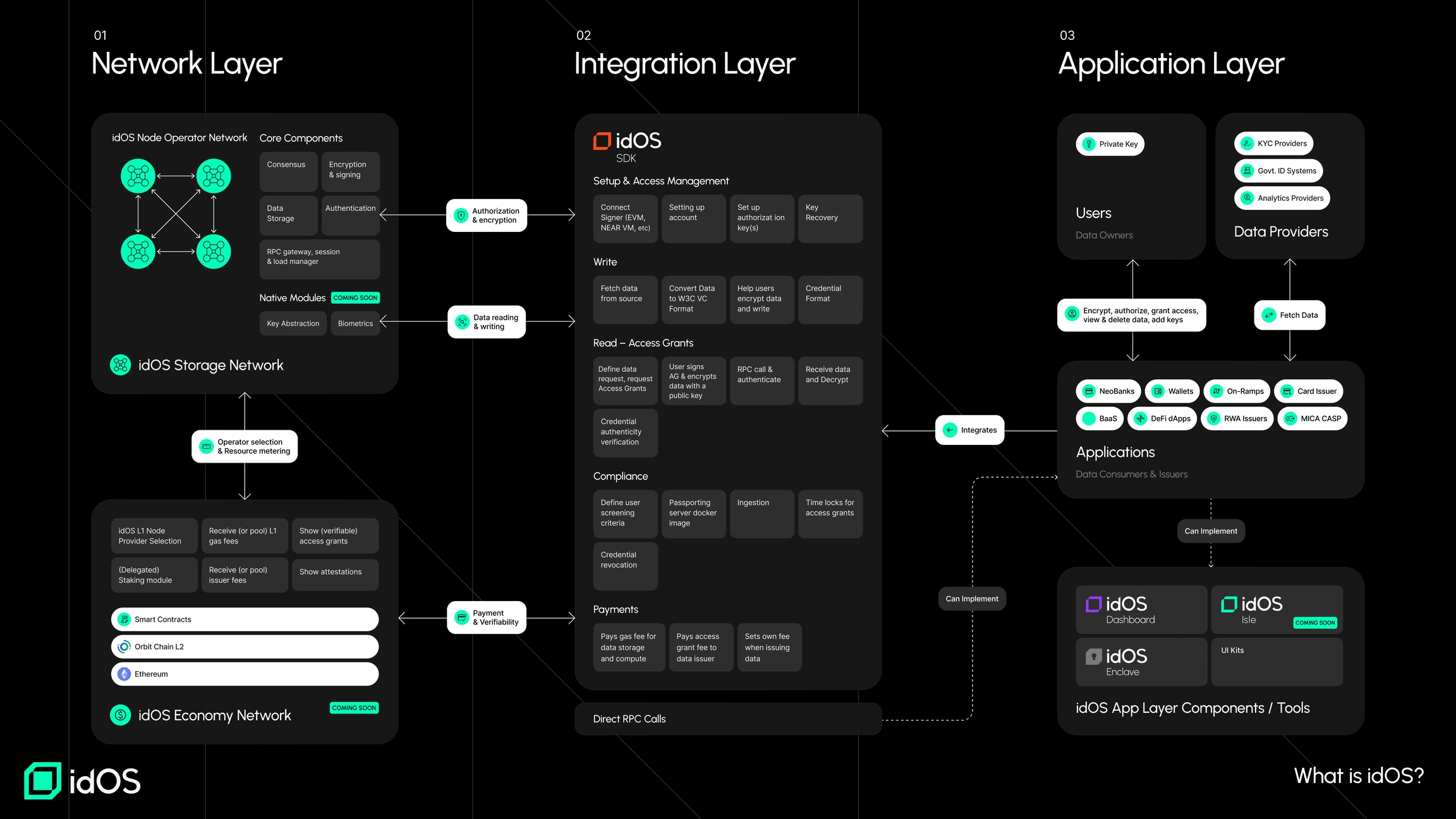
- Self-Sovereign Identity Control: Users retain full ownership and control of their identity data, deciding precisely what information to share and with whom, enhancing privacy and autonomy.
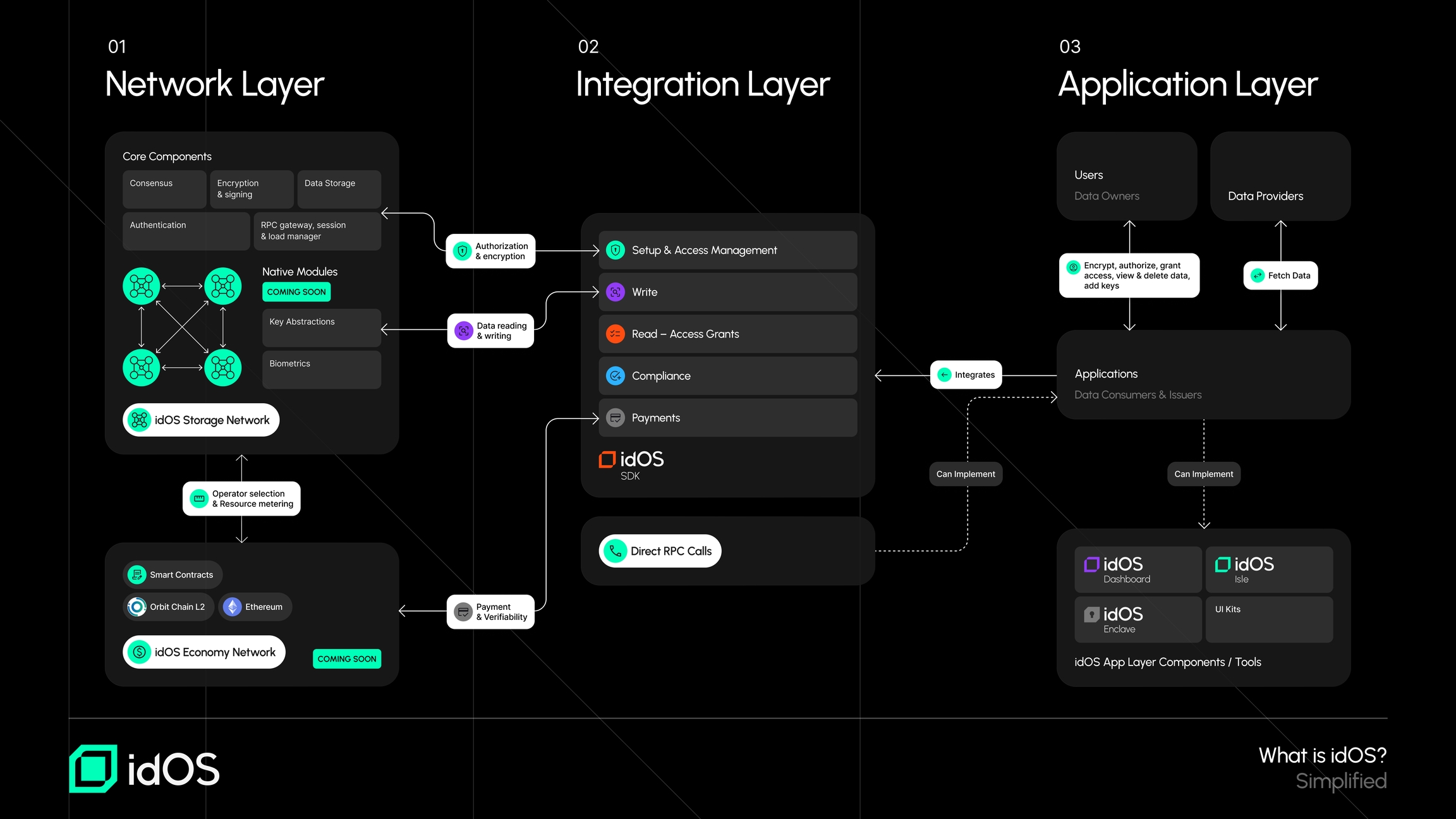
- Decentralized and Secure Data Storage: User credentials are encrypted and distributed across a decentralized network, reducing risks associated with centralized data breaches and ensuring high availability.
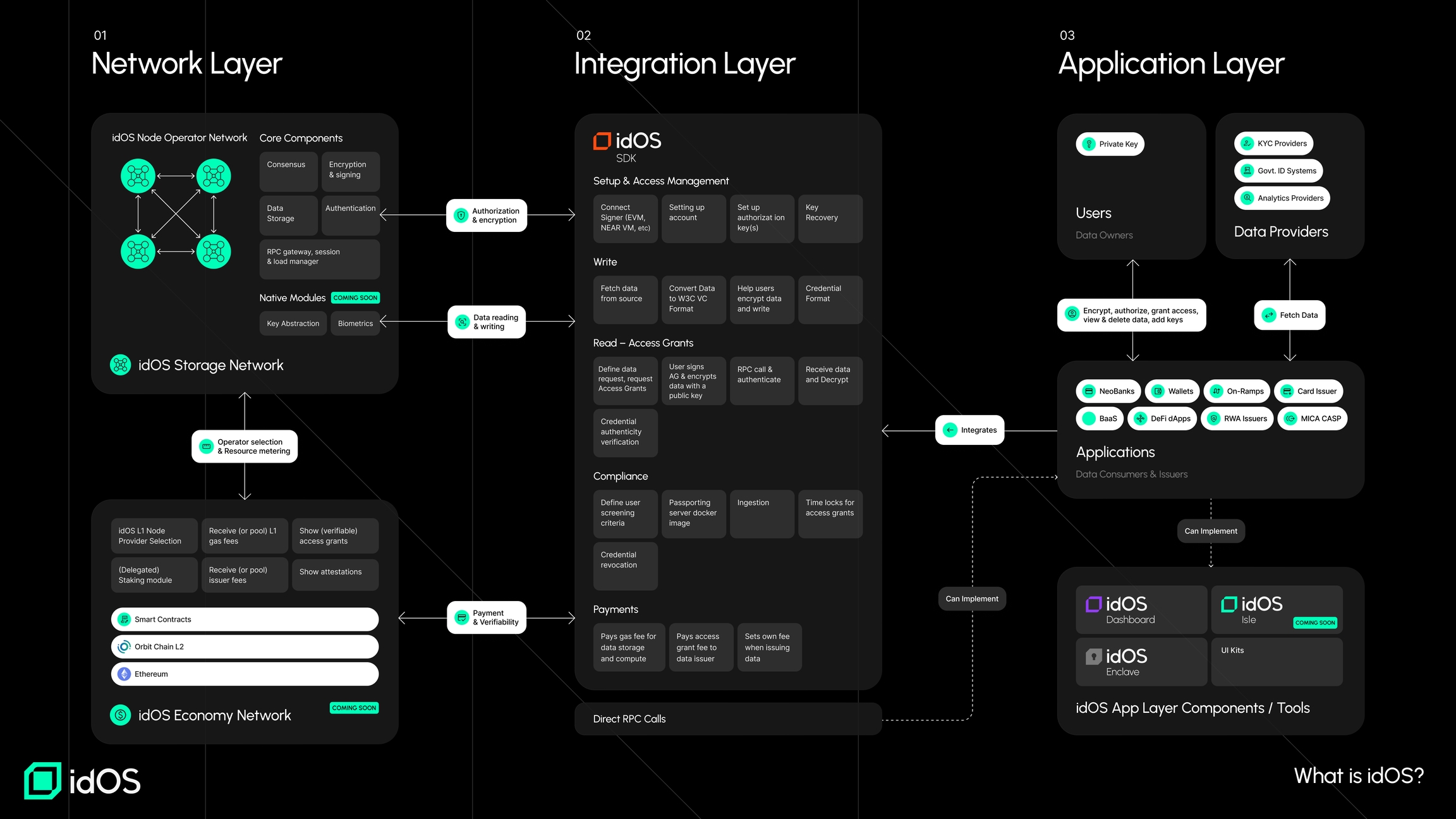
- Chain-Agnostic Interoperability: idOS is designed to work seamlessly across various blockchain platforms, allowing users to utilize their verified identities in diverse Web3 ecosystems without friction.
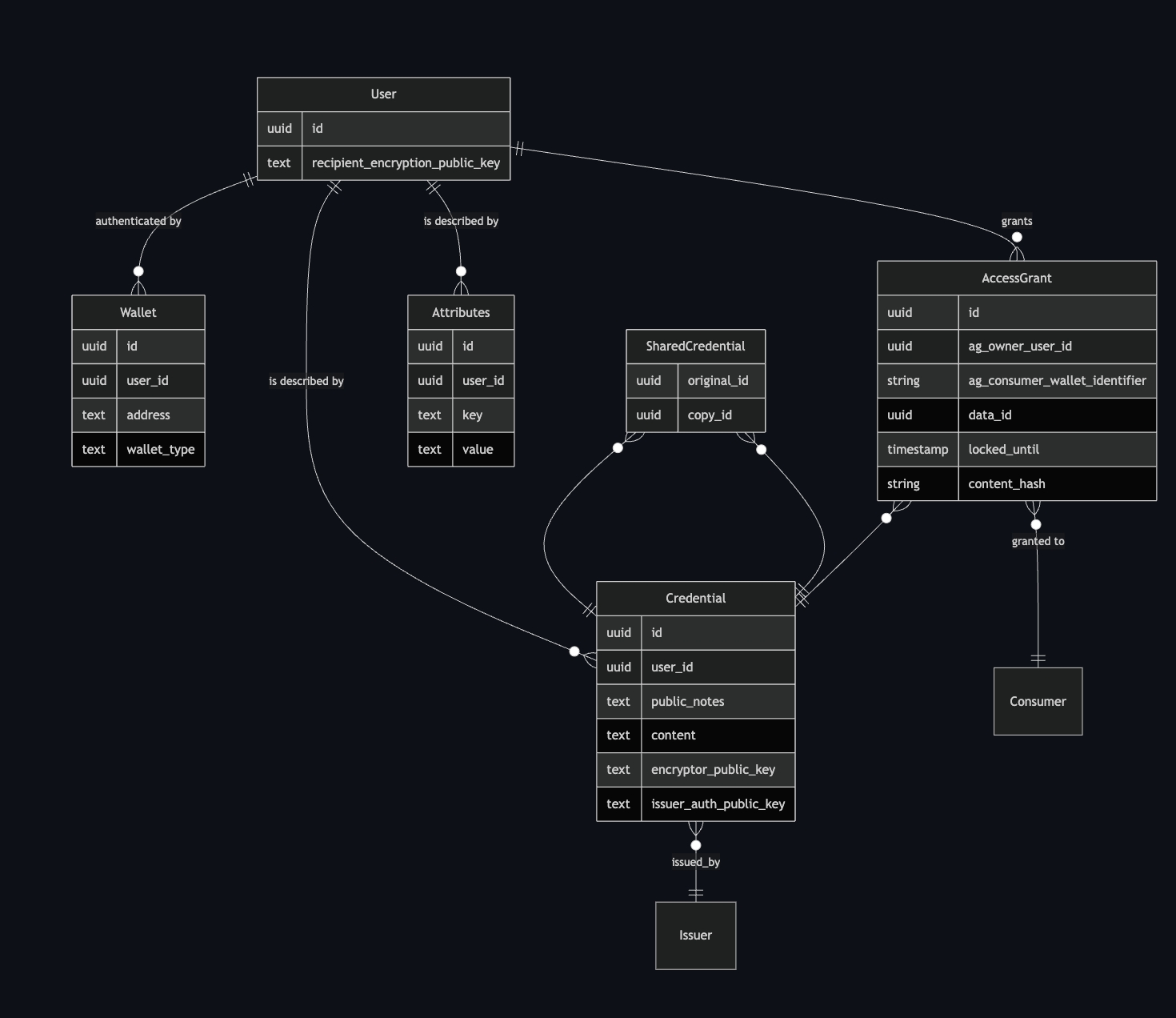
- Enhanced Developer Experience: Developers benefit from simplified KYC/AML compliance by integrating idOS, gaining access to a pool of pre-verified users and reducing onboarding friction for their applications.
- Advanced Security with Multi-Party Computation (MPC): By leveraging MPC in partnership with Partisia Blockchain, idOS ensures that private keys are only reconstructed when needed, minimizing exposure and reducing the risk of compromise.
From a risk management perspective, the decentralized nature of idOS mitigates many vulnerabilities inherent to centralized KYC providers. There is no single honeypot for hackers to target, and the use of Multi-Party Computation (MPC) ensures that private keys are never fully exposed or controlled by any one entity. This architecture aligns closely with evolving global standards for privacy-preserving digital identity, such as GDPR and emerging zero-knowledge proof frameworks, helping organizations future-proof their compliance posture.
Looking Forward: A Foundation for the Next Era of Digital Identity
The introduction of portable Web3 credentials via idOS signals a decisive move toward user-centric digital identity systems. As adoption accelerates across multiple blockchains, we are likely to see new patterns emerge in how individuals interact with on-chain services. One-time KYC will become the norm rather than the exception, unlocking seamless cross-platform experiences without sacrificing privacy or autonomy.
The broader implications extend beyond DeFi and NFTs: supply chain verification, healthcare data sharing, DAOs, gaming ecosystems, all stand to benefit from interoperable, privacy-preserving digital IDs. As more dApps and platforms join the idOS network, the value proposition grows exponentially for both users and service providers.
For those seeking technical deep dives or practical integration support, our resources on self-sovereign identity with idOS provide actionable guidance for every stage of adoption. The move toward decentralized KYC solutions is not just about convenience; it is about restoring agency to individuals while enabling safer growth for the entire Web3 ecosystem.
Key Takeaways: Why idOS Matters Now
- User Control: Individuals own their data and decide how it is used across all participating platforms.
- Developer Efficiency: Access to pre-KYC’d users streamlines compliance and accelerates time-to-market.
- Chain-Agnostic Interoperability: Seamless operation across Ethereum, Cosmos, Solana, Polkadot, and beyond.
- Mature Security Model: Decentralized storage plus MPC delivers robust protection against breaches.
- Sustainable Compliance: Built-in support for privacy regulations ensures ongoing regulatory alignment.
The convergence of one-time KYC and self-sovereign identity through solutions like idOS represents a critical inflection point for Web3 infrastructure. By eliminating outdated silos and empowering both users and developers with secure portable credentials, idOS is laying the groundwork for a more inclusive, and resilient, digital future. For further reading on decentralized KYC solutions powering this evolution, visit our comprehensive analysis at portable self-sovereign identity with idOS.




No comments yet. Be the first to share your thoughts!