
In the rapidly evolving Web3 landscape of 2026, zk identity wallets stand as essential privacy tools for self-sovereign ID, enabling developers to build decentralized applications that prioritize user control without compromising security. These zero-knowledge identity wallets leverage cryptographic proofs to verify attributes like age, residency, or humanity while revealing no underlying data, addressing the core tensions between compliance demands and privacy rights. As regulatory scrutiny intensifies and data breaches persist, Web3 developers face mounting risks in handling user identities; zk wallets mitigate these by shifting from centralized storage to user-held credentials.
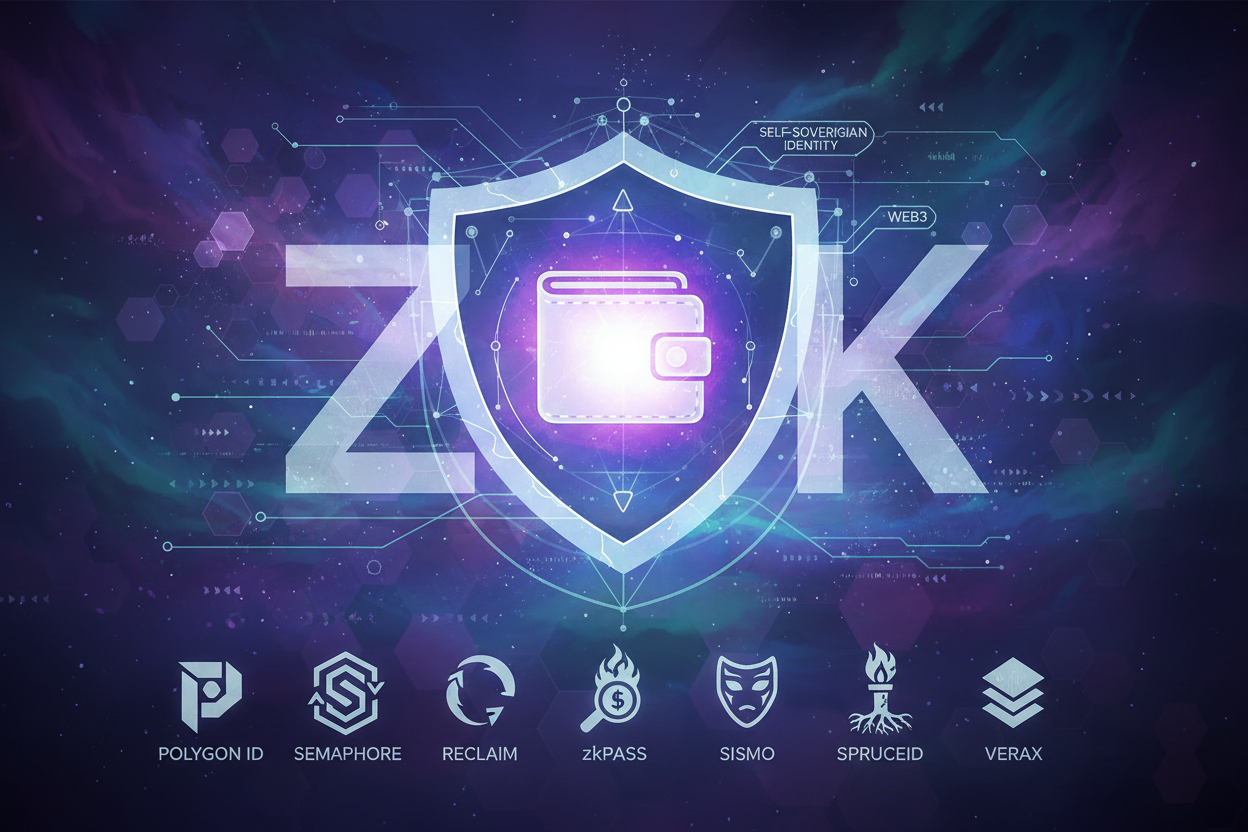
Recent advancements underscore this shift. Self Protocol's partnership with Google Cloud in 2025 integrates ZK-powered proof-of-humanity into developer platforms, serving millions without data retention. Privado ID, evolved from Polygon ID, offers chain-agnostic ZK verification for KYC, while zkMe and Veramo's ZK plugin enable selective disclosure across ecosystems. Yet, risks remain: immature ZK circuits could leak metadata, and post-quantum threats demand vigilant upgrades, as noted in ZK-ACE research verifying signatures on-chain.
Core Mechanics of ZK Proofs in Self-Sovereign ID Wallets
Zero-knowledge proofs (ZKPs) power self-sovereign ID wallets by allowing provers to demonstrate truth without disclosure. In practice, a user generates a succinct proof attesting to 'I am over 18' from a KYC credential, verifiable on-chain via SNARKs or STARKs. This aligns with DID standards, where wallets issue verifiable credentials (VCs) holders control entirely. For Web3 developers, integrating these via SDKs reduces liability; no server stores PII, slashing breach surfaces.
ZKPs separate verification from data exposure, a game-changer for DeFi and DAOs where trustless compliance is paramount.
However, developers must weigh trade-offs. Proof generation demands computational heft, potentially excluding low-end devices, and verifier trust assumptions require rigorous auditing. Protocols like zkID from Ethereum's Privacy Stewards advance scalable ZK for identities, but interoperability gaps persist across chains.
Essential Privacy Tools for Web3 Builders
Web3 developers building dApps for lending, governance, or socialFi need robust privacy-preserving DID solutions. Traditional OAuth exposes data trails; zk wallets enforce minimal disclosure, fostering user-centric designs. Consider DeFi KYC: prove solvency or accreditation without wallet linkage. Risks include sybil attacks, countered by proof-of-humanity layers, yet over-reliance on oracles introduces centralization vectors.
Top 8 ZK Identity Wallets
- Polygon ID: Chain-agnostic KYC framework (now Privado ID) using ZK proofs for privacy-preserving attribute verification without data exposure, ideal for Web3 compliance.
- Semaphore: ZK protocol for anonymous signaling and group membership proofs, enabling privacy-focused voting and notifications in decentralized apps.

- Reclaim Protocol: Generates ZK proofs for data ownership, allowing secure verification of off-chain data like bank statements without revealing sensitive details.

- zkPass: Enables passport verification through zero-knowledge proofs of KYC documents, supporting cross-border identity checks with minimal disclosure.
- Sismo Protocol: Creates privacy-preserving reputation badges via ZK, aggregating credentials for sybil-resistant scoring in Web3 ecosystems.
- Lit Protocol: Provides decentralized access control with ZK-enhanced programmable keys, gating content and NFTs securely across chains.
- SpruceID: Toolkit for credential issuance and DID management, integrating ZK for verifiable, user-controlled self-sovereign identities.

- Verax Protocol: Builds attestation chains using ZK proofs for scalable, tamper-proof credential verification in decentralized networks.
Among these, Polygon ID - now Privado ID - excels in reusable verifications, proving attributes like residency sans exposure. Semaphore enables group membership signals without identities, ideal for DAOs. Reclaim Protocol empowers users to reclaim LinkedIn or bank data privately, bridging Web2 to Web3. These tools, when integrated, demand careful gas optimization and circuit security reviews to avert exploits.
Navigating Risks and Integration Strategies
Adopting zk identity wallets involves risk-conscious strategies. Quantum vulnerabilities loom; ZK-ACE proposes circuit-verified post-quantum signatures. Developers should prioritize audited libraries, like those in zkMe for cross-border compliance. Start with Veramo's ZK plugin for modular credential flows, layering SpruceID for issuance and Verax for on-chain attestations. Early pilots reveal pitfalls: proof size bloats transactions, necessitating L2 deployments.
Sismo Protocol's badges aggregate reputations privately, enhancing sybil resistance in governance. Lit Protocol gates content with ZK access, while zkPass streamlines passport proofs for global apps. For onchain passport zk workflows, see how self-sovereign wallets empower data ownership. Balancing innovation with caution ensures scalable, resilient identity layers.
SpruceID facilitates secure credential issuance, allowing developers to create tamper-proof VCs for decentralized identity web3 apps, while Verax Protocol builds attestation chains that link proofs immutably on-chain. Together, these form a comprehensive toolkit, but integration demands foresight: mismatched circuits risk proof invalidation, and chain-specific optimizations vary efficacy.

Case Studies: zk Identity Wallets in Action
Privado ID powers DeFi platforms verifying residency for geo-compliant lending, where users prove eligibility without exposing passports. Semaphore shines in DAOs, enabling anonymous voting signals that confirm membership sans doxxing, as seen in early governance pilots. Reclaim Protocol bridges legacy data, letting holders attest salary ranges from bank APIs privately, crucial for undercollateralized loans. These deployments highlight privacy preserving DID at scale, yet reveal gas costs averaging 200k per proof, pushing L2 adoption.
zkPass integrates passport data for global KYC, reducing fraud in cross-border dApps, while Sismo Protocol's badges quantify on-chain reputation for airdrops, blending privacy with utility. Lit Protocol enforces NFT access via ZK-derived keys, preventing unauthorized shares. SpruceID's issuance streamlines enterprise pilots, issuing employee creds verifiable across chains. Verax chains attestations for perpetual audit trails, vital for regulatory nods. Real-world stress tests, like Self Protocol's 8 million users, affirm viability but expose edge cases: high-traffic proof queues and oracle dependencies.
| Wallet/Protocol | Key Feature | Supported Chains | Risk Level |
|---|---|---|---|
| Privado ID | Chain-agnostic KYC | EVM, Solana | Low |
| Semaphore | Anonymous signaling | Ethereum L2s | Medium |
| Reclaim Protocol | Web2 data proofs | Multi-chain | Low |
| zkPass | Passport verification | EVM | Medium |
| Sismo Protocol | Reputation badges | Ethereum | Low |
| Lit Protocol | ZK access control | Multi-chain | Medium |
| SpruceID | Credential issuance | EVM | Low |
| Verax Protocol | Attestation chains | Ethereum | Medium |
From this matrix, low-risk options like Privado ID suit production, while medium-risk tools like Semaphore demand beta testing. Developers integrating these must audit for side-channel leaks, as immature ZKPs could infer attributes from timing.
Risk Mitigation and Future-Proofing Strategies
While DID zk proofs promise empowerment, risks loom large. Sybil resilience falters without robust proof-of-humanity, as ZK-KYC papers note oracle collusion vectors. Post-quantum shifts, per ZK-ACE, necessitate hybrid signatures in circuits. Web3 builders should adopt Veramo's ZK plugin for interoperability, layering zkMe for compliance. Pilot on testnets, monitoring proof validity rates above 99.9%.
Regulatory horizons add complexity: EU's eIDAS 2.0 mandates selective disclosure, favoring these wallets, but U. S. clarity lags. Opinion: zk identity wallets aren't panaceas; pair with multi-sig issuance and off-chain ceremonies for defense-in-depth. As Ethereum's zkID advances, expect STARK upgrades slashing costs 50% by late 2026.
Explore further how self-sovereign identity wallets empower true digital freedom in governance. For onchain passport zk setups, prioritize audited SDKs from SpruceID and Verax. These tools equip developers to forge privacy-first Web3, where users wield identities as sovereign assets amid rising surveillance.
zk identity wallets thus anchor self-sovereign ID, blending cryptographic rigor with practical utility. Web3's future hinges on such innovations, tempered by disciplined risk management.




No comments yet. Be the first to share your thoughts!