
Digital identity is at a crossroads in 2025. As Web3 matures, the need for self-sovereign identity wallets has never been clearer. The promise: users finally own and control their digital credentials, not corporations or centralized databases. This seismic shift is being driven by new protocols like the idOS Network, which is rapidly becoming the backbone for portable, user-controlled identity across decentralized apps and blockchains.
Why Self-Sovereign Identity Matters in 2025
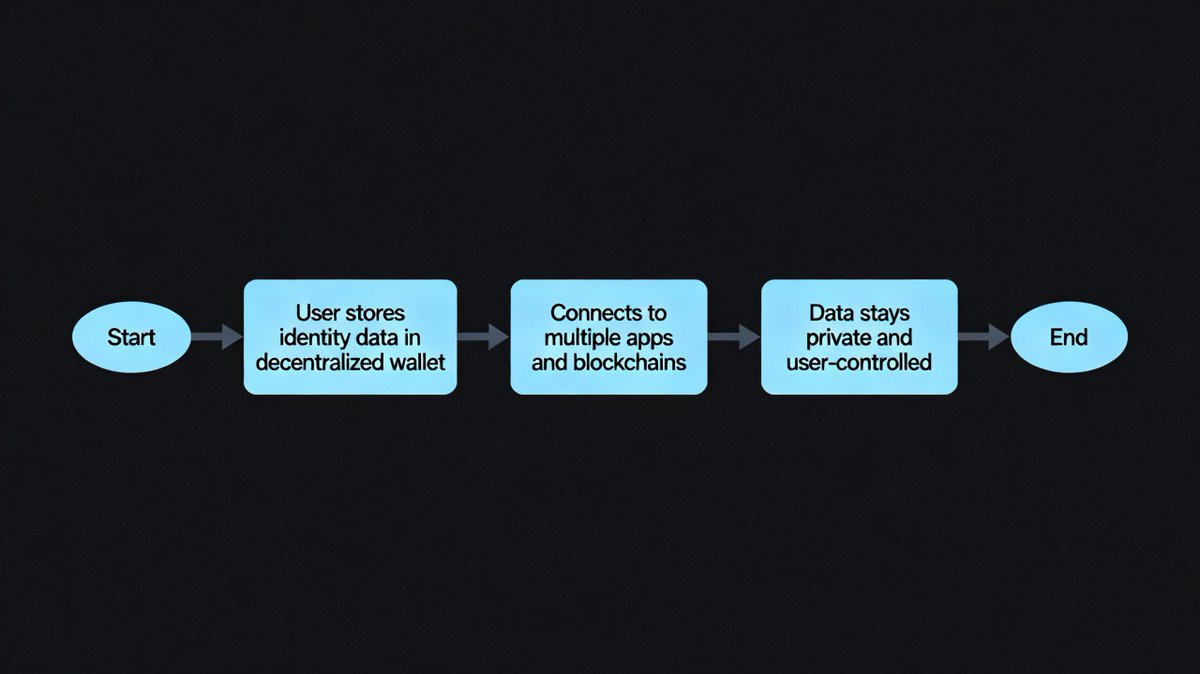
The core idea behind self-sovereign identity (SSI) is simple but radical: you, and only you, decide who can access your personal data. No more endless KYC forms or handing over your passport details to every new platform. Instead, SSI wallets let you manage credentials locally, share them selectively, and revoke access at any time. This approach isn’t just about convenience, it’s a robust privacy solution that aligns with the values of Web3.
Major industry reports from Dock Labs and Token Metrics highlight how businesses are being urged to adopt SSI systems to stay competitive. Regulatory tailwinds and user demand for privacy are accelerating this transition. SSI wallets are now essential tools for onboarding users to DeFi platforms, DAOs, NFT marketplaces, and even stablecoin ecosystems.
The idOS Network: A Chain-Agnostic Identity Layer
The idOS Network, short for Identity Operating System, is leading the charge on decentralized identity management in 2025. Its architecture enables reusable KYC credentials across more than 40 blockchains, a breakthrough for interoperability and user experience.
What sets idOS apart? It’s not just another wallet or credential manager. idOS operates as a decentralized data storage and access management protocol where all user data is encrypted and self-custodied. Users set granular permissions for every piece of information they share, whether it’s an age check for a DeFi app or proof of address for an NFT platform.
This infrastructure is made possible by strategic partnerships with major blockchain foundations like Arbitrum, Circle Ventures, Ripple, NEAR Foundation, Gnosis, Aleph Zero Foundation, Radix, and Tezos Foundation, all contributing to its recent $4.5 million funding round. The result: an ecosystem where your portable digital identity truly belongs to you.
Passwordless Security with Multi-Party Computation (MPC)
A major pain point in digital identity has always been key management, users either lose their seed phrases or fall victim to phishing attacks targeting passwords. idOS solves this by integrating Multi-Party Computation (MPC), developed in collaboration with Partisia Blockchain.
MPC enables a passwordless experience where private keys are abstracted away from the end-user. Instead of juggling passwords or seed phrases, users sign transactions with their existing wallets (like MetaMask or Trust Wallet), making onboarding seamless yet secure.
This innovation not only boosts security but also drives mass adoption by removing friction from the user journey, a critical factor as Web3 goes mainstream.
$IDOS Token Powers Governance and Incentives
The native token of the network provides $IDOS: is central to its decentralized governance model. Priced at $0.7500 as of November 2025 (with a recent 24h change of and 7.14%), $IDOS is used for staking by node operators, paying fees for credential issuance or verification, participating in governance votes, and delegating authority over certain identity operations.
A total supply of 1 billion tokens has been minted; around 13.8% is reserved for community engagement through airdrops and incentive programs, a smart move that’s fueling rapid ecosystem growth while aligning incentives between users and operators.
User-Controlled Credentials: Practical Benefits Today
The impact of portable self-sovereign identities goes beyond theory:
- One-click KYC: Complete verification once on idOS; reuse credentials across dozens of dApps without re-uploading documents (see how one-click KYC works here)
- Selectively share data: Prove you’re over 18 without revealing your birthdate; confirm residency without exposing your full address
- Total revocability: Instantly revoke permissions if you suspect compromise or simply want more privacy
- No vendor lock-in: Move seamlessly between platforms thanks to chain-agnostic design (learn more about portability here)
For developers and enterprises, this model slashes onboarding costs and reduces regulatory risk. By tapping into idOS’s reusable credentials, platforms can verify users efficiently while remaining compliant with global data privacy mandates. The frictionless experience also means higher conversion rates and deeper user trust, two factors that are increasingly hard to earn in today’s fragmented Web3 landscape.
Ecosystem Expansion and Interoperability
The most powerful feature of the idOS Network is its chain-agnostic approach. By supporting over 40 blockchains, idOS acts as a universal identity layer, bridging siloed ecosystems and enabling true digital ownership wherever you transact. This is especially critical as DeFi, NFT marketplaces, DAOs, and gaming platforms continue to multiply across different chains.
Interoperability isn’t just a buzzword here, it’s a lived reality for users who want their credentials to follow them seamlessly between apps without repeated verification headaches. This approach is redefining what it means to have portable digital identity in 2025, making user-controlled credentials the new standard for decentralized onboarding.
Privacy by Design: Zero-Knowledge Proofs and Selective Disclosure
idOS doesn’t just encrypt data; it empowers users with advanced privacy tools like zero-knowledge proofs (ZKPs). With ZKPs, you can prove facts about your identity, such as age or residency, without revealing any underlying personal details. This selective disclosure model is essential for minimizing data exposure and meeting both user expectations and emerging regulations.
Data never leaves your control unless you explicitly allow it. If an app requests proof of KYC or other credentials, you decide exactly what gets shared, and for how long. You can revoke access instantly if needed. This level of granular consent is a massive leap ahead of legacy login models that treat personal data as an afterthought rather than a core asset.
Community-Driven Governance and Incentives
The $IDOS token isn’t just a utility; it’s your voice in the future of decentralized identity management. Token holders participate directly in network governance, proposing upgrades, voting on protocol changes, or allocating resources for ecosystem growth. With $IDOS priced at $0.7500 as of November 2025, this governance layer incentivizes active participation from both end-users and infrastructure providers.
Community engagement is further supercharged by targeted airdrops and rewards programs that encourage real usage rather than speculative holding. This aligns incentives across all stakeholders, from early adopters to established platforms, ensuring the network stays robust, secure, and responsive to user needs.
Looking Ahead: The Path to Mainstream SSI Adoption
The momentum behind self-sovereign identity wallets is undeniable as we close out 2025. With protocols like idOS delivering on the promise of user-owned digital credentials, we’re witnessing the foundation of a more private, interoperable Web3 economy where individuals, not corporations, are in control.
For anyone building or using decentralized apps today, integrating SSI solutions like idOS isn’t just an option, it’s quickly becoming table stakes for privacy-conscious users who demand frictionless onboarding without sacrificing security or sovereignty.
- Developers: Prioritize SSI wallet compatibility for onboarding flows to future-proof your dApp.
- Users: Take advantage of portable credentials to cut down on redundant verifications while maximizing privacy.
- Ecosystem partners: Join the consortium driving open standards for reusable KYC across DeFi and beyond (see how reusable KYC works here).
The next wave of Web3 adoption will be shaped by those who control their identities, not those who surrender them at every login screen. The idOS Network shows us what’s possible when privacy meets usability at scale.




No comments yet. Be the first to share your thoughts!