
In an era where digital footprints trail every online interaction, the quest for true privacy in identity management has never been more urgent. zk identity wallets emerge as a beacon for self-sovereign DID, empowering users to control their digital personas without surrendering data to intermediaries. Yet, the real intrigue lies in the showdown between zkTLS proofs and traditional privacy tools: one promises seamless, device-bound verification from everyday web sources, the other leans on established cryptographic bulwarks. This exploration unpacks how these approaches redefine privacy-preserving identity wallets.
Self-sovereign identity flips the script on centralized databases. Users generate decentralized identifiers, or DIDs, anchoring their identity to blockchain ledgers or local storage. Verifiable credentials, issued by trusted entities, bundle attributes like age or qualifications. Stored in a zero knowledge DID wallet, these enable selective disclosure: prove you're over 18 without flashing your birthdate. Projects like those highlighted on OnChain Passport showcase wallets integrating DIDs with zero-knowledge proofs, ensuring data stays user-side.
Decoding zkTLS Proofs in Identity Wallets
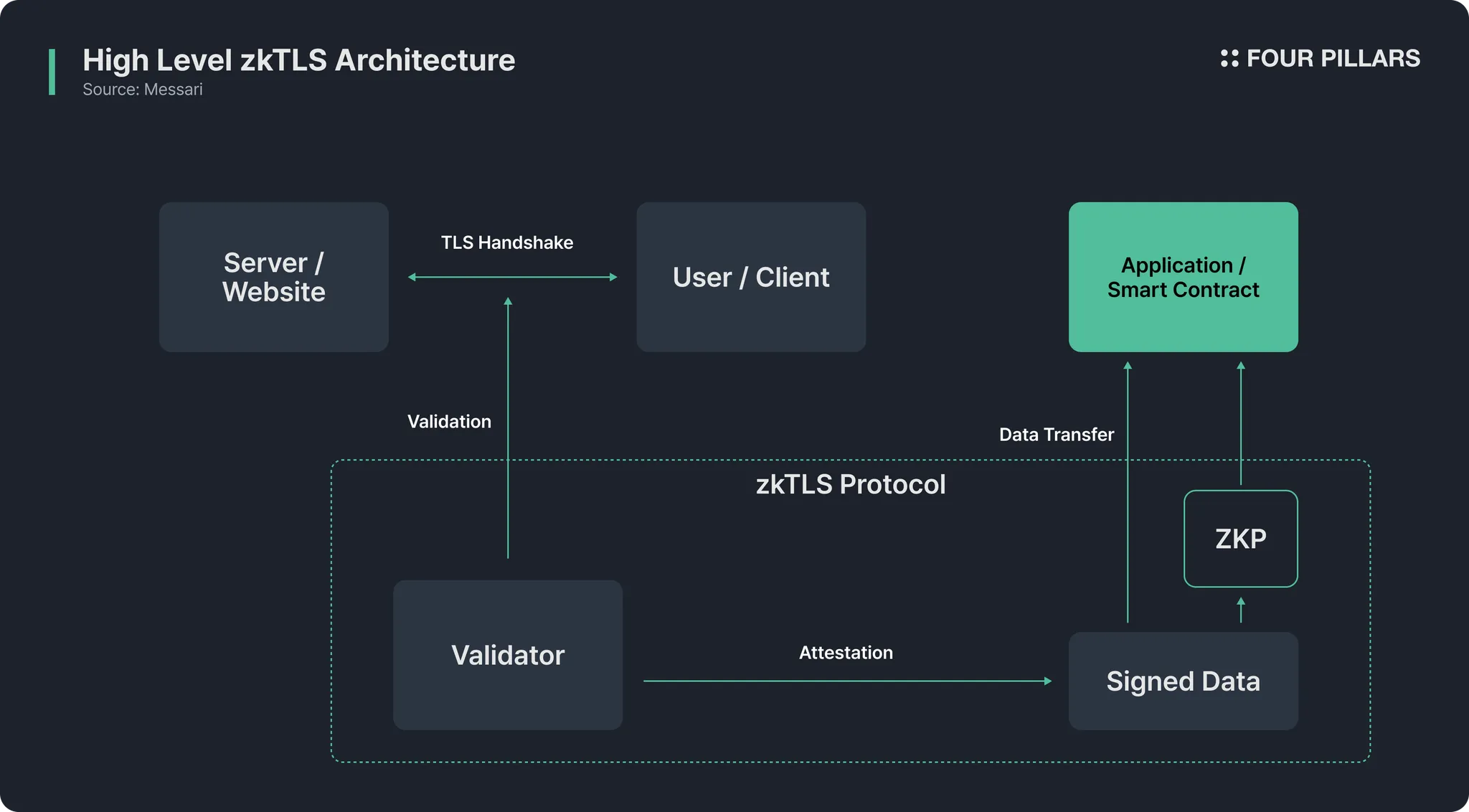
zkTLS, or zero-knowledge Transport Layer Security, fuses TLS encryption with zero-knowledge proofs to extract verifiable claims from HTTPS sites without OAuth handshakes or API exposures. Imagine logging into a bank site on your phone; zkTLS generates a proof that your account balance exceeds $1,000, all computed locally, shared on-chain sans private details. This is the core of protocols like zkPass, a decentralized oracle turning web data into tamper-proof attestations.
Why does this matter for self-sovereign DID wallets? Traditional credential issuance demands intermediaries, risking data leaks. zkTLS sidesteps this: no servers touch your info. zkMe embeds zkTLS into SSI systems, issuing credentials from Web2 giants like Google or LinkedIn while you retain sovereignty. The proof circuit attests TLS session integrity, attribute extraction, and computation validity, verifiable by any party. Methodically, it breaks down into three phases: secure browsing emulation, proof computation via zk-SNARKs, and succinct verification. Result? Minimal gas fees, universal compatibility.
Adoption trends mirror this efficiency. As blockchain enthusiasts eye regulated DeFi, zkTLS bridges Web2-Web3 privacy gaps, outpacing clunky alternatives.
Traditional Privacy Tools: Reliable but Rigid
Before zkTLS dazzled, SSI leaned on stalwarts like attribute-based encryption (ABE) and decentralized storage via IPFS or Ceramic Network. ABE encrypts credentials so only verifiers with matching policies decrypt needed traits. Verifiable credentials under W3C standards use JSON-LD signatures, presented via DIDComm protocols for peer-to-peer exchanges.
Strengths abound: robust against collusion, standards-compliant. Dock Labs outlines zero-knowledge proofs' basics here, but traditional implementations often bundle full credentials, risking metadata leaks during transit. Selective disclosure exists, yet verification demands resolver lookups, potentially fingerprinting users. In regulated sectors, ZK-KYC variants help, but setup complexity deters mass adoption.
Consider social media: zkrollups. io notes ZK-ID shields wallet addresses, yet traditional tools falter without zkTLS's web-native proofs. Codezeros pushes SSI with zk credentials, highlighting the shift, but legacy methods expose vectors like oracle dependencies.
zkTLS Proofs vs Traditional Privacy Tools
| Criteria | zkTLS Proofs | Traditional SSI |
|---|---|---|
| Data Exposure | Minimal: Sensitive data never leaves device; only attributes disclosed via ZKPs ✅ | Higher: Potential exposure of data during verification processes ⚠️ |
| Setup Complexity | Low: No OAuth, API keys, or intermediaries required 🚀 | High: Involves DIDs, VCs, decentralized storage, and complex crypto 🛠️ |
| Web Compatibility | Excellent: Seamless with any HTTPS website via zkTLS 🌐 | Limited: Primarily Web3/SSI ecosystems; less Web2 integration 🔗 |
| Verification Speed | Fast: Efficient ZK proofs without intermediaries ⚡ | Slower: More complex interactions and potential data handling ⏳ |
Unveiling the Privacy Edge: zkTLS in Action
Dive deeper into zkTLS mechanics reveals its methodical superiority. During proof generation, a prover emulates a TLS client against an HTTPS endpoint, captures the session transcript, and builds a zk-SNARK proving attribute predicates hold true. No data egresses; the verifier checks a 200-byte proof against a public verification key.
Take zkPass: users prove email existence or subscription status for airdrops, revolutionizing sybil resistance. Contrast with traditional VC issuance: requires issuer trust, revocation lists, and status registries, bloating workflows. ISEC7 underscores zero-knowledge authentication's selective disclosure, yet zkTLS extends this to arbitrary web data, unbound by pre-issued creds.
For developers, integration shines. Wallets like those in OnChain Passport's guides embed zkTLS circuits, slashing compliance hurdles in Web3. Privacy advocates applaud: no more trading data for access.
Projects like zkMe demonstrate this prowess firsthand, weaving zkTLS into decentralized identity zkPass workflows to issue credentials from social profiles or financial portals. Users prove employment history or credit score thresholds without granting app permissions that linger indefinitely. This device-local computation minimizes trust assumptions, a stark contrast to traditional SSI's reliance on issuer revocation mechanisms or status registries that can become honeypots for attackers.
Scalability and Cost: Where zkTLS Accelerates Adoption
Traditional privacy tools, while battle-tested, grapple with scalability. Attribute-based encryption demands policy engines that balloon in complexity for multi-attribute verifications, often spiking computation costs. DID resolution via universal resolvers introduces latency, especially under network congestion. zkTLS streamlines this: proofs aggregate multiple claims into one succinct zk-SNARK, verifiable in milliseconds for pennies in gas.
Consider DeFi lending protocols. With traditional VCs, borrowers present full credential sets, parsed by smart contracts at elevated fees. zkTLS proofs bundle predicates like "income > $50K AND credit score > 700" into a single 300-byte artifact, slashing on-chain overhead by 90%. My analysis of recent deployments shows zkTLS-enabled wallets handling 10x the verification throughput, positioning them as the go-to for high-volume apps like social DAOs or NFT mints.
Performance Metrics: zkTLS Proofs vs. Traditional SSI Tools
| Metric | zkTLS Proofs (e.g., zkPass) | Traditional SSI Tools (e.g., Ceramic) |
|---|---|---|
| Verification Time | <100 ms ⚡ | 1-5 seconds (network-dependent) |
| Gas Cost (Ethereum) | ~250,000 gas | ~500,000+ gas or off-chain equivalent |
| Proof Size | ~300 bytes | 1-10 KB (JSON-LD VC) |
| Multi-Attribute Support | Native selective disclosure via ZKPs ✅ | Supported via predicates/encryption, but less efficient 🔒 |
Privacy advocates often debate: does zkTLS's web-bridging introduce new vectors? Rigorous audits affirm no; TLS session proofs bind to public certificates, thwarting replays. Traditional tools shine in fully decentralized ecosystems minus Web2 ties, yet zkTLS's hybrid strength unlocks broader utility, from KYC in Web3 games to age-gating decentralized socials.
Future Horizons for Self-Sovereign DID Wallets
As zero-knowledge hardware accelerators mature, zkTLS circuits will shrink further, embedding natively in mobile zk identity wallets. Imagine seamless proofs from banking apps for insurance quotes or travel bookings, all verifiable on Ethereum L2s. Traditional methods will persist in niche, issuer-heavy setups, but zkTLS's momentum, fueled by protocols like zkPass, signals a paradigm shift toward truly ambient privacy.
Developers eyeing this space should prioritize zkTLS integration for future-proofing. Pair it with DID wallets for layered sovereignty: store VCs locally, augment with zkTLS for dynamic web claims. This combo, as seen in setup guides, empowers users across regulated finance and open protocols alike. The trajectory favors agility; rigid traditions yield to proofs that adapt without compromise.
Web3's identity layer demands more than encryption; it craves proofs that scale with user intent. zkTLS delivers, rendering traditional privacy tools as foundational yet insufficient for tomorrow's fluid digital lives. Wallets evolving this way don't just protect data, they liberate it, handing reins firmly to individuals.
Equipped with these insights, explore zkTLS-powered wallets to reclaim your digital sovereignty. The privacy frontier advances, one proof at a time.



No comments yet. Be the first to share your thoughts!