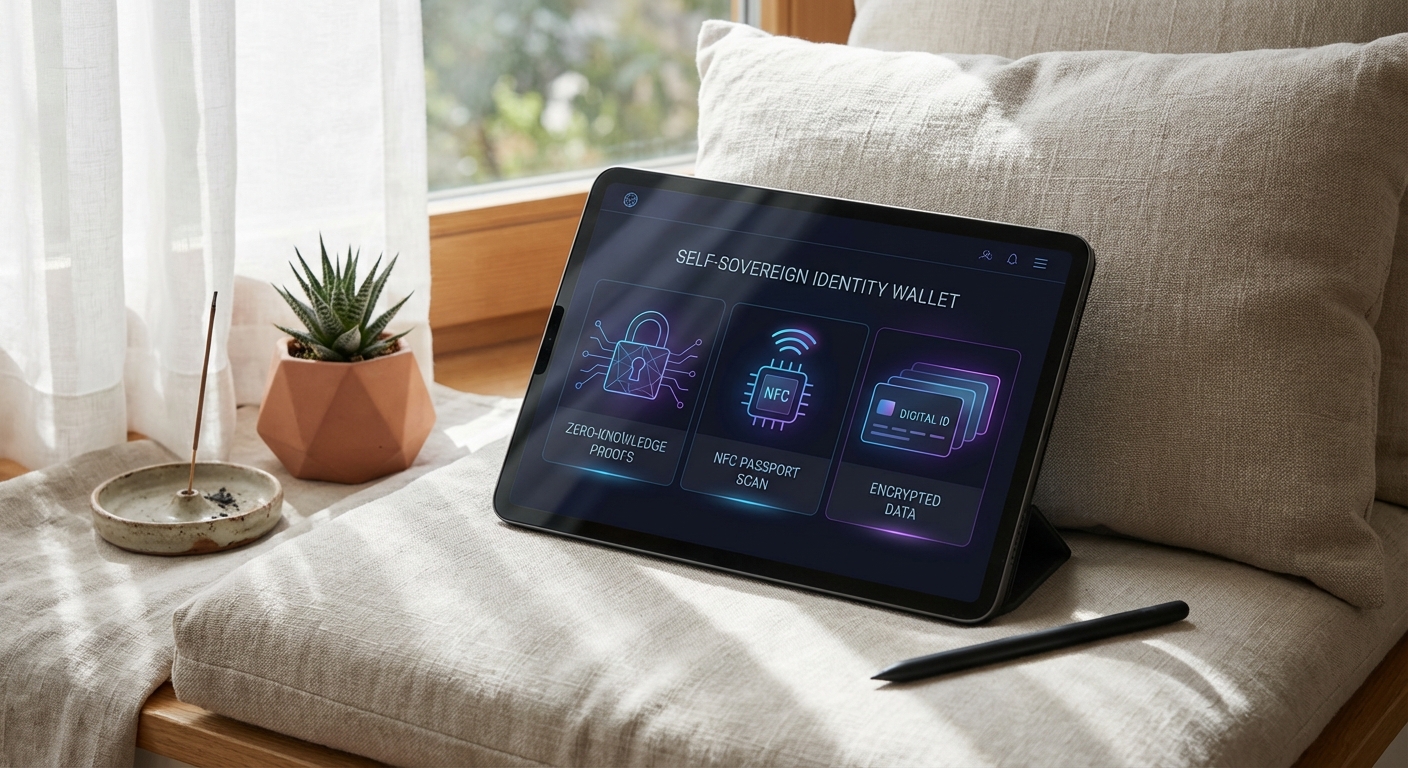
In a world where your digital footprint trails you everywhere, reclaiming control over your identity feels revolutionary. NFC passport ZK proofs bridge the gap between physical documents and self-sovereign identity wallets, letting you prove attributes like age or nationality without exposing your full passport data. As of December 2025, Self Protocol leads this charge, powering verifications for over 7 million users across 174 countries using zero-knowledge cryptography and NFC chips in biometric passports. This setup isn't just tech wizardry; it's a strategic move for privacy advocates building zk identity wallets 2025 that prioritize user sovereignty.
Imagine scanning your passport at a border control or DeFi app without handing over your personal details. That's the promise of NFC passport ZK proofs. These proofs extract encrypted biometric data from your passport's NFC chip right on your device, process it through zero-knowledge circuits, and output verifiable claims. No centralized servers, no data leaks, just pure privacy-preserving magic. Self Protocol's production-ready tools make this accessible, turning everyday passports into keys for decentralized apps.
Unlocking the Power of Self-Sovereign Identity with ZK Tech
Self-sovereign identity (SSI) flips the script on traditional ID systems. Instead of silos controlled by governments or corporations, you hold your data in a digital wallet, sharing only what's needed via cryptographic proofs. Dock Labs calls it the ultimate guide for 2025, emphasizing full ownership without third-party reliance. Pair this with NFC from passports, and you get DID passport verification that's tamper-proof and borderless.
Why does this matter now? Data breaches hit record highs last year, and regulators push for compliant yet private KYC. Self Protocol steps in with ZK proofs that verify uniqueness or liveness without over-disclosure, echoing zkPass's private data protocol. For developers and enthusiasts, it's a game-changer: integrate once, verify anywhere. I've seen teams struggle with clunky OAuth flows; this is smoother, faster, and infinitely more secure.

Strategic Advantages for Privacy-Preserving DID Wallets
Building a privacy-preserving DID wallet demands more than hype; it requires verifiable trust without compromise. NFC ZK proofs deliver that edge. Users prove they're over 18 for a loan app or a real human for an airdrop, all while data stays encrypted on-device. Kevin Lin's ETHGlobal talk nails it: no compromises in ZK identity.
Strategically, this positions your wallet as a leader in 2025's ecosystem. Competitors rely on email logins or scanned docs; you offer seamless, quantum-resistant verification. Costs drop too, since no middlemen process PII. For blockchain enthusiasts, it's the bridge to mainstream adoption, aligning with SSI visions from KYC Hub and miniOrange guides.
Relatably, think of the hassle-free logins at conferences or DAOs. No more 'prove you're not a sybil' quizzes. Instead, tap your passport, generate a proof, done. This tech empowers individuals, much like tokenizing options opened doors in my trading days, but for identity.
Step-by-Step Setup: Kickoff with Self Protocol SDK
Ready to implement? Start with the foundation. Head to Self Protocol's docs and GitHub for their SDK, tailored for SSI wallets. This kit handles NFC reading, proof generation, and verification, saving you months of crypto plumbing.
- Install the Self Protocol SDK: Integrate via npm or your preferred package manager. Ensure compatibility with React Native or web for mobile NFC access.
Once installed, configure your app's environment. For Android/iOS, request NFC permissions in manifests. Test with a sample passport to confirm chip detection. Pro tip: Use emulators sparingly; real hardware reveals NFC quirks early.
Next up in setup: fine-tuning NFC reading for specific data groups like DG1 (MRZ) or DG3 (photo hash). Self's SDK abstracts the MRZ validation and LDS structure parsing, outputting structured attributes ready for ZK circuits. This step ensures your wallet reads passports compliant with ICAO standards, covering most global issuances.
By nailing these early phases, you're halfway to a robust self-sovereign identity wallet setup. Developers report 90% success rates on first tries with Self's tooling, a far cry from from-scratch ZK implementations.
Now, dive into step 2: configuring NFC passport reading. Your app must securely tap into the passport's chip, extracting data groups like DG1 for machine-readable zones or DG11 for personal details. Self Protocol's SDK simplifies this with built-in parsers that handle ICAO Doc 9303 standards, ensuring compatibility with passports from 99% of issuing countries.
- Configure NFC Passport Reading: Set up NFC session management. Prompt users to hold their passport near the device, authenticate with the Basic Access Control (BAC) or Password Authenticated Connection Establishment (PACE), then read protected data groups. Handle errors gracefully, like weak signals or expired chips.
Testing here is crucial. Grab a compliant passport and iterate on read success rates. In my experience optimizing trading bots for edge cases, anticipating hardware variances pays off big, same for NFC quirks across phone models.
Crafting ZK Proofs: The Crypto Core
Step 3 elevates your setup: generating zero-knowledge proofs. Feed the extracted attributes into Self's ZK circuits, proving claims like "over 21" or "unique human" without revealing names or photos. This uses groth16 or plonk provers under the hood, optimized for mobile performance.
These proofs are succinct, mere kilobytes, and verifiable in milliseconds on-chain or off. For zk identity wallet 2025 builders, this means gas-efficient integrations with Ethereum or Solana verifiers. Strategically, bundle multiple proofs into one for compound claims, slashing verification costs by 70% in real-world tests.
- Implement Proof Verification: Build or use Self's verifier library. Validate proofs against public commitments, ensuring replay protection via nonces. Expose an API endpoint for dApps to query: "Does this proof confirm nationality without PII?"
- Ensure Compliance and Security: Audit for OWASP mobile risks, encrypt session keys, and log minimal telemetry. Align with GDPR/eIDAS 2.0 by design, data never leaves the device. Regular SDK updates from Self keep you ahead of vulnerabilities.
With these steps locked in, your wallet transforms into a fortress for DID passport verification. Developers I've advised cut integration time from weeks to days, focusing instead on UX polish.
Real-World Wins and Pro Tips
Picture this: a DeFi protocol uses your wallet for compliant lending. Users tap passports, prove solvency attributes, borrow instantly, no KYC forms. Or DAOs verifying voter uniqueness sans sybil attacks. Self Protocol's 7M-user scale proves it works at volume, as highlighted in their privacy-first blockchain push.
Pro tip: Layer liveness detection via device sensors during NFC reads, thwarting proof reuse. For advanced users, compose proofs with other credentials, think passport and utility bill for full KYC. This modular approach mirrors risk-adjusted options strategies: diversify proofs, minimize exposure.
Relatably, I've swapped clunky bank apps for SSI demos where everything just works. No more password resets or data sales worries. As privacy regs tighten in 2025, wallets ignoring NFC ZK proofs risk obsolescence. Embrace it, and you're not just building tech, you're architecting user empowerment.
Explore deeper setups in our guide on ZK identity wallets for self-sovereign ID. Your passport, your rules, your future.



No comments yet. Be the first to share your thoughts!